


Non-medical in-home care is everyday assistance that helps older adults stay safe, comfortable, and independent at home without medical treatment or nursing services. Caregivers help with tasks like bathing, dressing, meals, housekeeping, transportation, and companionship, while doctors and nurses handle anything clinical.
For many families, it becomes an important step that allows aging adults to stay in familiar surroundings longer while maintaining dignity and routine. As more seniors choose to age in place, understanding how this type of care works has become increasingly important.
Key takeaways
- Non-medical in-home care helps with daily living, like bathing, meals, housekeeping, transportation, and companionship, without medical treatment.
- It differs from home health care, which uses nurses and therapists and usually needs a doctor’s order.
- The national median was $35 an hour in 2025, and Medicare generally doesn’t pay when personal care is the only care needed.
- In California, check that an agency is licensed, its caregivers are on the state registry, and it carries the required insurance and bond.
What Does "Non-Medical" Mean in Home Care?
Non-medical means the caregiver supports daily living rather than treating a health condition. Non-medical assistance does not involve diagnosing conditions, administering injections, or performing skilled nursing tasks. Instead, caregivers provide practical day-to-day support that improves quality of life.
You may also see it called nonmedical, non-skilled, custodial, or personal care. Non-skilled does not mean unimportant or untrained. It simply means the care does not involve medical procedures requiring clinical licensing.
This model is especially valuable for seniors who are mostly independent but need extra help with physical tasks, memory-related routines, or transportation. According to the National Institute on Aging, aging in place can improve emotional well-being and help older adults maintain a stronger sense of independence when the proper support systems are in place.
Examples of Non-Medical In-Home Care Services
Many families are surprised by how broad elderly home care assistance can be while still remaining non-medical in nature. Common examples include:
- Personal care: help with bathing, grooming, dressing, toileting, and moving safely around the home
- Household support: light housekeeping, laundry, meal preparation, grocery shopping, and organizing living spaces to reduce hazards
- Companionship: conversation, games, walks, reading together, or simply providing a reassuring presence during the day
- Transportation and errands: rides to appointments, the pharmacy, community events, or social activities
- Medication reminders: prompting someone to take medications on schedule, without administering them
- Respite for family caregivers: a few hours of coverage so relatives can work, rest, or handle their own responsibilities
These tasks may seem simple, but they can significantly reduce isolation, stress, and fall risks for older adults.
Medical vs. Non-Medical Home Care: What Is the Difference?
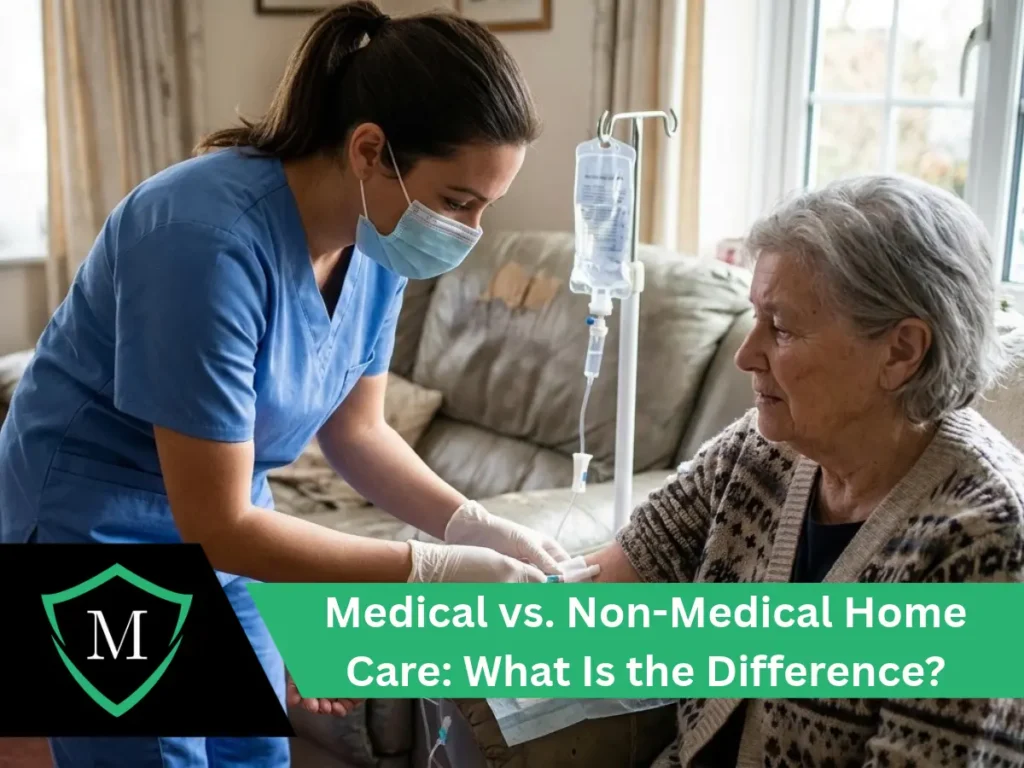
One of the biggest misconceptions is assuming all home care providers offer healthcare services. Understanding the distinction helps families make better decisions.
|
[] |
Non-Medical In-Home Care |
Home Health Care (Medical) |
|---|---|---|
|
Who provides it |
Trained caregivers and home care aides |
Nurses and physical, occupational, or speech therapists |
|
What it includes |
Daily living help, companionship, household tasks |
Wound care, injections, therapy, health monitoring |
|
Doctor’s order needed |
No |
Yes, usually after surgery, hospitalization, or illness |
|
How long it lasts |
Ongoing, from a few hours a week to around the clock |
Usually short term, tied to recovery goals |
|
How it is usually paid |
Private pay or long-term care insurance |
Often Medicare or health insurance when criteria are met |
A caregiver may help someone safely get into the shower, but they would not perform wound care or medical assessments. Needs can also change over time. Some seniors begin with companionship and household assistance, then later require additional medical oversight as health conditions progress.
Who Benefits From Non-Medical In-Home Care for Seniors?
Not every older adult needs intensive care. In many situations, a small amount of support can prevent larger problems from developing later. Seniors who benefit most often include individuals experiencing reduced mobility, mild memory challenges, chronic fatigue, balance concerns, or difficulty managing household routines independently.
Older adults living alone are also common candidates. Even when someone remains relatively healthy, isolation can affect nutrition, emotional health, and safety awareness. The Centers for Disease Control and Prevention notes that social isolation among older adults is associated with higher health risks, including depression and cognitive decline. Companion care for seniors helps here by keeping them engaged with conversation, hobbies, and community activities.
Family caregivers benefit as well. Caring for an aging loved one can become physically and emotionally demanding over time. Outside caregivers are not replacing family relationships. They work alongside relatives to provide dependable daily assistance and help families avoid burnout.
For home care agencies
Run a non-medical home care agency?
How Much Does Non-Medical In-Home Care Cost?
Costs vary widely depending on location, frequency of care, and the level of support needed. Nationally, the median rate for a non-medical caregiver was $35 per hour in 2025, or about $80,080 per year for 44 hours of care a week, according to the CareScout Cost of Care Survey. Rates in many parts of California run higher than the national median.
Most families pay privately, but a few other sources may help:
- Long-term care insurance: many policies cover in-home help with daily activities.
- Medicare: generally does not pay for personal care when it is the only care someone needs. It covers home health services only when skilled care is also required.
- Medi-Cal: California’s In-Home Supportive Services (IHSS) program can pay for in-home help for eligible low-income seniors and people with disabilities.
Early support can also reduce future expenses by helping prevent falls, hospitalizations, or caregiver burnout.
How to Choose a Non-Medical Home Care Provider
Before arranging care, families should evaluate both current and future needs. The right level of assistance depends on mobility, cognitive function, living arrangements, and personal preferences.
Questions to Ask Before Hiring
- How are schedules handled, and can the care plan change over time?
- What training do caregivers receive, and are they supervised?
- Are caregivers background checked and employed by the agency?
- How are visits documented, and how will the agency communicate with family?
- What happens if a caregiver is sick, or if there is an emergency?
- Is the agency licensed and insured?
What California Requires of Home Care Agencies
In California, agencies that provide non-medical care in clients’ homes must be licensed as home care organizations by the Department of Social Services, and their caregivers must be listed on the state’s Home Care Aide Registry after a background check. State law also requires licensed agencies to carry:
- Workers’ compensation for their home care aides
- General and professional liability insurance of at least $1 million per occurrence and $3 million in the aggregate
- An employee dishonesty bond of at least $10,000
Asking for proof of these protects your family if a caregiver is injured in the home or property goes missing. If you own or plan to open a home care agency, our non-medical home care insurance page explains the coverage agencies need. McDonough Insurance Services has helped California care providers and their families since 1981.
Before your client catches it
Check your coverage against state requirements.
- $1M / $3M liability limits
- Workers’ comp for aides
- $10,000 dishonesty bond
- Abuse and molestation coverage
Frequently Asked Questions
Final Thoughts
They can provide medication reminders, but they generally do not administer medications unless state regulations and specific training allow it.
It depends on the person. Many families start with a few hours a week and add time as needs change, up to 24-hour or live-in care.
Yes. Caregivers can provide supervision, routines, reminders, and companionship. Ask whether the agency offers dementia-specific training, and involve medical providers as needs progress.
Disclaimer: This article is for general informational purposes only and is not legal, tax, or insurance advice. Coverage options, requirements, and pricing vary by business, industry, location, and carrier, and policy terms always govern. Reading this article does not create coverage or an advisory relationship. For guidance on your specific situation, contact McDonough Insurance Services at 949-361-8471 or request a quote. Our licensed team has helped California businesses find the right coverage since 1981.