


The difference between a 1099 contractor and a W-2 employee comes down to control. A W-2 employee works under your direction, and you withhold their taxes and cover them under workers’ compensation. A 1099 independent contractor runs their own business, decides how the work gets done, and handles their own taxes and insurance.
Many business owners believe hiring workers as independent contractors is an easy way to reduce payroll costs. Using 1099 contractors is perfectly legal in the right circumstances, but classifying someone incorrectly can trigger audits, lawsuits, and higher insurance costs that continue for years.
Key takeaways
- A W-2 employee works under your control, while a 1099 contractor runs their own business. The tax form you issue doesn’t decide which one a worker is.
- California presumes workers are employees under the ABC test, and unlicensed tradespeople doing licensed work are presumed to be employees.
- Misclassification can bring retroactive workers’ comp premium, payroll tax assessments, and California penalties of $5,000 to $25,000 per violation.
- Reviewing each role before issuing a 1099, and again every year, is the simplest way to avoid the problem.
1099 vs W-2: What Is the Difference?
Worker classification isn’t determined by what you call someone or which tax form you issue. Federal and state agencies evaluate the actual working relationship.
| Factor | W-2 Employee | 1099 Independent Contractor |
|---|---|---|
| Control over the work | Business directs how, when, and where | Worker decides how the job is done |
| Tools and equipment | Usually supplied by the business | Usually supplied by the worker |
| Taxes | Employer withholds income tax and pays its share of payroll taxes | Worker pays their own income and self-employment taxes |
| Workers’ comp and unemployment | Provided through the employer | Not provided by the hiring business |
| Benefits | May qualify for health, retirement, and paid leave | Not eligible for company benefits |
| Onboarding form | Form W-4 | Form W-9 |
| Year-end tax form | Form W-2 | Form 1099-NEC |
How the IRS Decides
The IRS looks at three types of evidence: behavioral control (who directs the work), financial control (who invests in tools, sets prices, and carries the risk of profit or loss), and the relationship of the parties (contracts, benefits, and whether the work is ongoing and central to the business). Review the IRS worker classification guidance for details.
California’s ABC Test
California uses a stricter standard. Under the ABC test, a worker is presumed to be an employee unless the hiring business can prove all three of the following:
- A: The worker is free from your control and direction in performing the work.
- B: The work is outside the usual course of your business.
- C: The worker is customarily engaged in an independently established trade or business of the same kind.
Some occupations and business-to-business arrangements qualify for exemptions, but each comes with strict conditions. For work that requires a contractor’s license, California Labor Code section 2750.5 adds another rule: a worker without the required license is presumed to be an employee. The California Employment Development Department explains how the state applies these standards.
Why Do Businesses Misclassify Workers?
Most employers don’t intentionally misclassify workers. Common reasons include:
- Trying to reduce labor costs by avoiding payroll taxes, workers’ compensation premiums, and benefits
- Following industry practice, or agreeing when a worker asks to be paid on a 1099
- Relying on outdated advice, especially about California rules
None of these change the outcome. Classification isn’t based on mutual agreement, and short-term savings can disappear quickly once a worker is found to be an employee.
How Misclassification Triggers Audits
Workers’ Compensation Premium Audits
Your workers’ compensation carrier audits your payroll at the end of each policy term. If the auditor finds 1099 workers who were really functioning as employees, their pay is added to your payroll and you are billed additional premium retroactively. Payments to subcontractors who can’t show their own workers’ compensation coverage are commonly added as well.
Payroll Tax Assessments
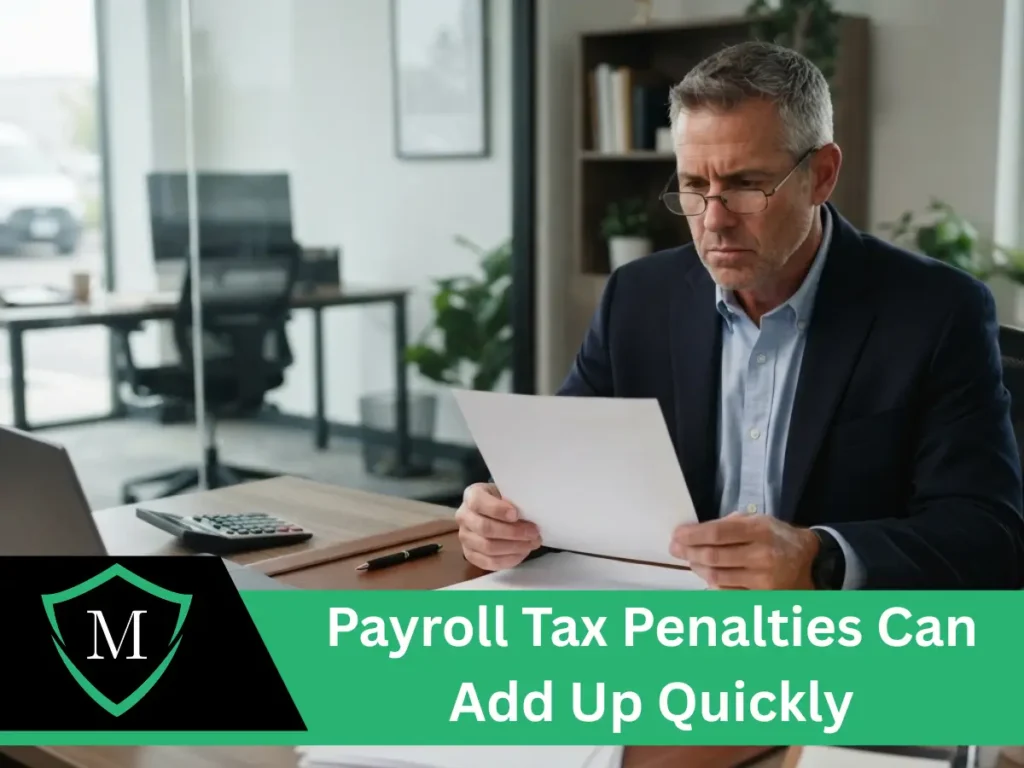
If an agency determines a worker should have been treated as an employee, the employer may owe unpaid Social Security, Medicare, federal and state unemployment taxes, and income tax withholding, even if the worker already reported the income. Interest and penalties continue to grow until the matter is resolved.
One Audit Often Leads to Another
A workers’ compensation claim, payroll audit, or labor complaint can prompt reviews by other agencies responsible for taxes, wages, or unemployment insurance. In California, willful misclassification carries civil penalties of $5,000 to $15,000 per violation, rising to $10,000 to $25,000 per violation when there is a pattern or practice. Accurate records kept throughout the year make these reviews far easier to answer.
Workers’ compensation
Worried about your next premium audit?
How Misclassification Leads to Lawsuits
Injuries to Workers You Treated as Contractors
A workplace injury is often what brings worker classification into question. If an injured 1099 worker is found to be an employee and your policy didn’t account for them, the claim, medical costs, and legal disputes can land on your business.
This comes up often in the trades. If you hire an unlicensed electrician or other tradesperson for licensed work, the law can treat that person, and anyone they bring to the job, as your employee. Independent tradespeople protect themselves and the businesses that hire them by keeping their license current and carrying their own coverage, such as electrician insurance and workers’ compensation or a filed exemption.
Wage and Hour Claims
Employees are entitled to protections independent contractors generally don’t receive, including overtime, minimum wage, meal and rest breaks, and reimbursement for business expenses. When several workers were classified the same way, one complaint can grow into a class action.
Benefits Claims
Reclassified workers may also claim eligibility for health insurance, retirement plans, paid leave, or profit-sharing they were previously excluded from.
How Misclassification Raises Insurance Costs
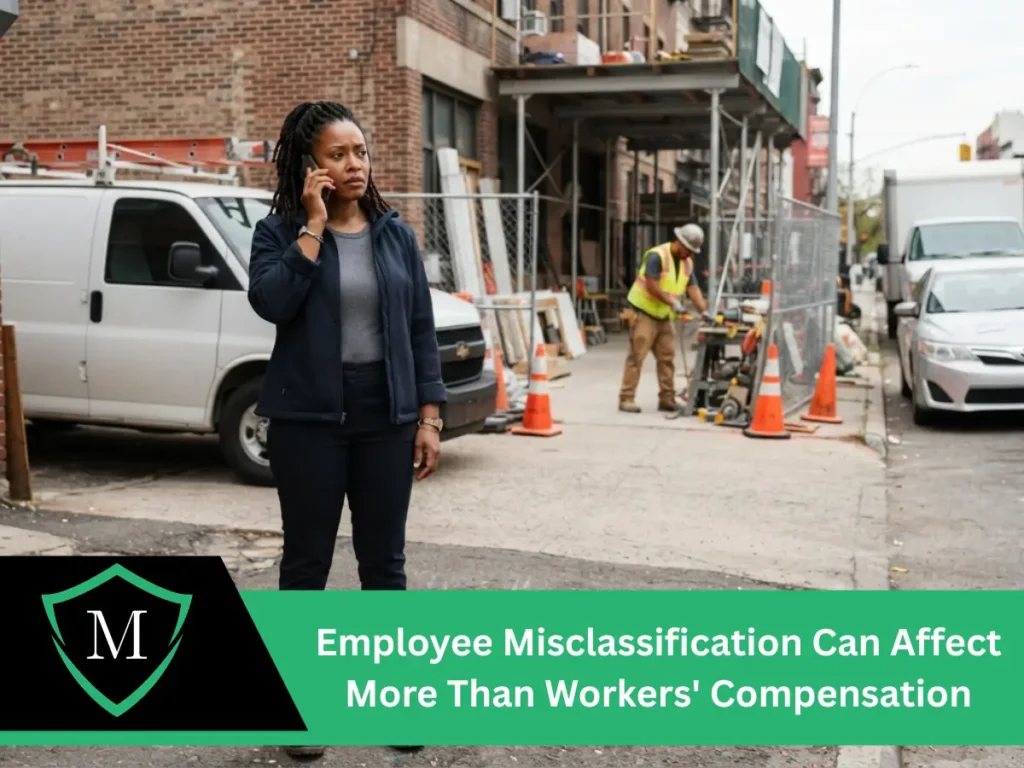
Higher Workers’ Comp Premiums for Years
Claims and audit adjustments can raise your Experience Modification Rate (EMR), which directly affects future workers’ compensation premiums. Some businesses also face policy cancellation or fewer carrier options at renewal.
Other Commercial Policies
Insurance carriers expect businesses to accurately report payroll, job classifications, and the nature of their workforce. General liability, commercial auto, and umbrella policies can all be affected when a premium audit finds unreported workers, through additional premium, coverage disputes, or policy changes.
Employment Practices Liability (EPLI)
EPLI helps protect businesses against certain employment-related claims. Once a worker is reclassified as an employee, disputes involving wages, discrimination, retaliation, or wrongful termination can become more complex than expected.
Before your next audit
Check your coverage against your real workforce.
- 1099 payroll review
- Subcontractor certificates
- Experience Mod (EMR) check
- Employment practices liability
How to Reduce Your Risk

Preventing employee misclassification starts with reviewing each working relationship before issuing a Form 1099:
- Test each role before you hire. Apply the IRS factors and, in California, the ABC test.
- Verify licenses and insurance. For trade work, confirm the contractor’s license and collect a current certificate of insurance showing their own coverage.
- Keep records. Contracts, invoices, licenses, and certificates for every 1099 worker make audits faster.
- Review classifications every year. Someone who started as a contractor may gradually begin working like an employee as duties change.
- Correct mistakes early. The IRS Voluntary Classification Settlement Program lets eligible employers reclassify workers going forward with partial relief from federal employment taxes.
- Get the right advice. A CPA or employment attorney can confirm classification, and your insurance agent can make sure your policies reflect your actual workforce.
McDonough Insurance Services helps California employers understand how worker classification affects their workers’ compensation insurance and commercial coverage, so audit results don’t come as a surprise. Identifying these risks early is far less expensive than responding to audits, claims, or legal disputes after they happen.
Frequently Asked Questions
Final Thoughts
Disclaimer: This article is for general informational purposes only and is not legal, tax, or insurance advice. Coverage options, requirements, and pricing vary by business, industry, location, and carrier, and policy terms always govern. Reading this article does not create coverage or an advisory relationship. For guidance on your specific situation, contact McDonough Insurance Services at 949-361-8471 or request a quote. Our licensed team has helped California businesses find the right coverage since 1981.