
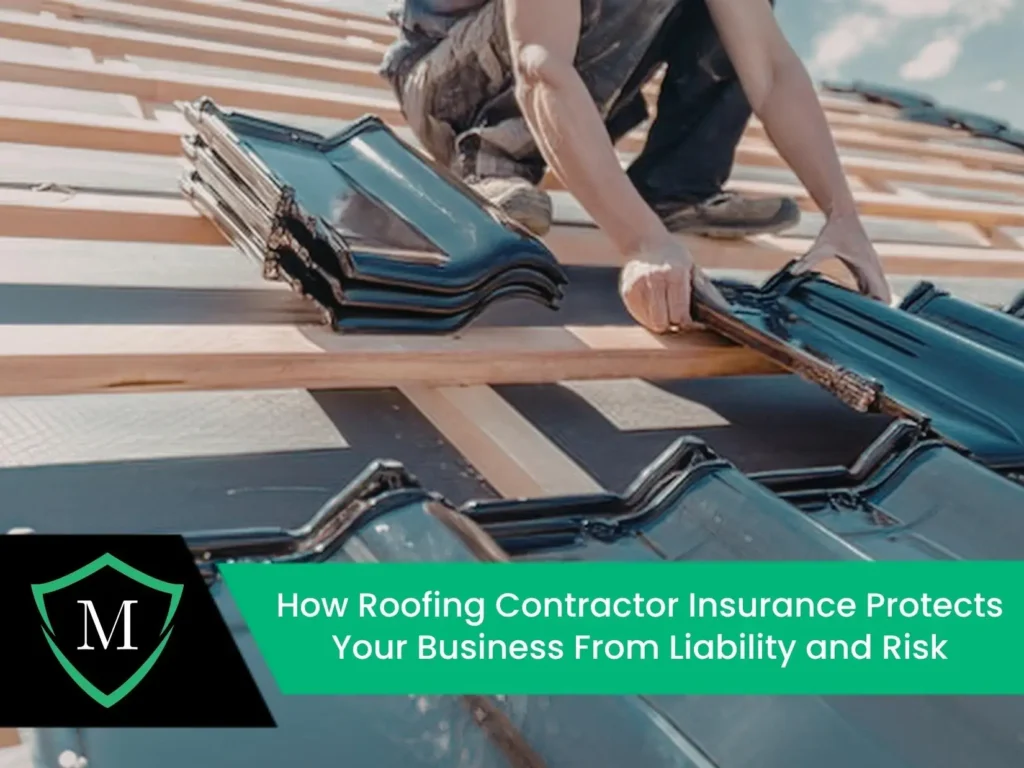
Roofing contractor insurance protects your business by paying for the claims roofers face most: injuries to your crew from falls, damage to a customer’s home from leaks or falling debris, accidents in work trucks, and stolen tools and equipment. In California, licensed roofing contractors must also carry workers’ compensation even if they have no employees.
A roofing job doesn’t start when the ladder goes up. It starts the moment you take responsibility for someone’s home. One loose shingle, one misstep on a steep slope, or one unexpected storm can turn a routine project into a costly problem.
Key takeaways
-
- Falls are the leading cause of death in construction, so injuries to your crew are a roofer’s biggest risk.
-
- California requires C-39 roofing contractors to carry workers’ compensation, even with no employees.
-
- Leaks that show up after a job is finished fall under completed operations coverage, which should be part of your liability policy.
-
- Check your policy for exclusions on height, hot work, or project types before you sign a contract.
Why Roofing Carries More Risk Than Most Trades
Roofers work at height, on steep surfaces, with heavy materials and changing weather. OSHA identifies falls as the leading cause of death in construction and requires fall protection when workers are 6 feet or more above a lower level. Its Stop Falls resources explain how to plan for it.
Physical danger is only half the picture. A single incident can lead to medical bills, property damage claims, legal disputes with homeowners, and project delays. Without coverage, those costs land directly on your business.
How Each Coverage Protects a Roofing Business
Many people focus only on the cost of an insurance policy. A more important question is the cost of not having one. Here is what the right coverage does for your business.
1. Protects Your Business From Costly Lawsuits
Defending a lawsuit can cost thousands of dollars before a court ever reaches a decision, even when the claim is unfounded. General liability insurance helps pay for legal defense, settlements, and judgments when a third party claims bodily injury, property damage, or personal and advertising injury. A customer tripping over loose flooring, an employee damaging a client’s property, or marketing materials that unintentionally infringe on a copyright could each lead to a claim.
2. Helps You Recover After Property Damage
Fires, burst pipes, vandalism, theft, and severe storms can damage buildings, inventory, machinery, and computers with little warning. Commercial property insurance helps repair or replace covered property, which is especially valuable for manufacturers, retailers, restaurants, healthcare providers, and any business that depends on expensive equipment or inventory.
3. Keeps Income Flowing During a Shutdown
Many businesses survive the initial disaster but struggle in the weeks that follow. If a covered loss forces you to close temporarily, rent, loan payments, payroll, and utilities are still due. Business interruption insurance helps replace lost income and cover those ongoing expenses while you recover, which matters most for businesses that rely on a single location.
4. Protects Your Employees
Workplace accidents happen even in low-risk offices. Workers’ compensation insurance provides medical care, rehabilitation, and partial wage replacement for covered work-related injuries and illnesses. Pairing coverage with the safety practices the Occupational Safety and Health Administration (OSHA) recommends can lower claim frequency and support morale and retention.
5. Helps You Recover From Cyberattacks
Customer records, payment information, and employee data make every business a target, not just large corporations. After a ransomware attack or data breach, cyber liability insurance can help pay for forensic experts, system restoration, customer notifications, credit monitoring, and legal claims. It works best alongside the basic steps the Cybersecurity and Infrastructure Security Agency (CISA) recommends, such as multi-factor authentication, regular software updates, and data backups.
6. Builds Credibility With Customers and Partners
Clients, landlords, lenders, and vendors want reassurance that your business can meet its obligations if something goes wrong. Many ask for a certificate of insurance before signing a contract, especially in construction, consulting, manufacturing, and transportation. Businesses that already carry the right coverage move through contract negotiations faster and can compete for larger projects.
7. Helps You Meet Legal and Contract Requirements
Some coverage is required. California, like most states, requires employers to carry workers’ compensation insurance once they hire employees, and commercial auto insurance is generally required for vehicles used in business operations. Commercial leases, vendor agreements, licensing agencies, and government contracts often set minimum insurance limits before work can begin. Meeting them helps you avoid project delays, contract disputes, and penalties.
8. Covers Mistakes in Professional Services
If your business gives advice, creates designs, or provides professional services, a client can claim that an error or oversight cost them money. Professional liability insurance, also called errors and omissions (E&O) insurance, helps cover defense costs and settlements for those claims, which general liability usually excludes.
9. Protects You From Employee-Related Claims
Claims of wrongful termination, discrimination, harassment, or retaliation can come from current or former employees, even when a business follows the rules. Employment practices liability insurance (EPLI) helps pay legal defense and settlement costs, which is why it is worth considering as soon as you hire your first employees.
10. Supports Long-Term Financial Stability
Without insurance, a major loss is paid from operating capital, emergency reserves, or borrowed money. Coverage keeps those funds available for hiring, equipment, and growth, so a single setback doesn’t define your business’s future. Over time, that is the advantage of business insurance that matters most.

Which Industries Benefit Most From Customized Business Insurance?
Every industry has different risks, so the right coverage mix varies:
- Construction and contractors: broader liability limits, since crews work on customer property with heavy equipment
- Professional services: professional liability for errors and omissions
- Restaurants: coverage for food-related risks, equipment breakdowns, and customer injuries
- Manufacturers: protection for inventory, machinery, completed products, and supply chain interruptions
- Transportation: commercial auto, cargo, and higher liability limits
- Healthcare: professional liability, privacy, and regulatory compliance
- Technology: cyber liability and data protection
That is why effective insurance programs are designed around each company’s operations, contracts, workforce, and assets rather than generic assumptions about an industry.
Free coverage review
See where your current policy leaves you exposed.
- Liability limits
- Property values
- Business interruption
- Cyber and EPLI gaps
How to Choose the Right Business Insurance
Choosing the right business insurance starts with understanding your company’s unique risks:
- Start with your risks. Consider your industry, size, assets, employees, vehicles, and daily operations.
- Check required coverage. Review legal, lease, and contract requirements before you buy.
- Don’t buy on price alone. A lower premium can mean higher deductibles, lower limits, or exclusions you only discover after a claim.
- Insure property for today’s costs. Rising construction and equipment costs can leave older property limits too low.
- Pair insurance with risk management. Safety programs, cybersecurity controls, and emergency plans reduce claims and can help keep premiums in check.
- Review coverage every year. Update it when you hire, add locations, buy equipment, or launch new services.
Working with an independent agency lets you compare coverage from multiple carriers and spot gaps before a claim does. McDonough Insurance Services has helped California businesses since 1981. Explore our business insurance options to build coverage that fits your operations.
Frequently Asked Questions
Final Thoughts
Disclaimer: This article is for general informational purposes only and is not legal, tax, or insurance advice. Coverage options, requirements, and pricing vary by business, industry, location, and carrier, and policy terms always govern. Reading this article does not create coverage or an advisory relationship. For guidance on your specific situation, contact McDonough Insurance Services at 949-361-8471 or request a quote. Our licensed team has helped California businesses find the right coverage since 1981.