

Professional liability insurance for home health agencies (HHAs) pays for your legal defense, settlements, and judgments when a patient or family claims that the care your agency provided caused harm. Think of a fall during a transfer, a medication error, or a wound that got worse between visits. In healthcare it’s often called malpractice insurance.
Most home health agencies need it, because claims can arrive even when the care was good, and defending one is expensive either way. This guide covers where these claims actually come from, what the coverage pays for and what it doesn’t, the gaps agencies often miss, and what to ask before you buy.
Key takeaways
- Professional liability covers claims that your agency’s care caused harm. General liability covers accidents unrelated to care.
- Falls, medication errors from outdated orders, wound care, missed changes in condition, and weak documentation drive most claims.
- Abuse allegations, theft, staff driving, and data breaches usually need separate coverage.
- Requirements come from state licensing, payer contracts, and referral partners, so check each before you buy or renew.
What Professional Liability Covers for Home Health Agencies, and What It Doesn’t
This coverage responds when someone says your team’s care fell short: a missed symptom, a wrong dose, a skipped repositioning schedule. It typically pays for your defense, settlements, and court judgments, and some policies also cover defense before a licensing board. It won’t pay for intentional harm, and it isn’t built for accidents unrelated to care. Those belong to other policies.
| Situation | Policy that usually responds |
|---|---|
| A patient falls during a transfer | Professional liability |
| A visitor slips in your office | General liability |
| An aide is accused of stealing jewelry | Crime bond (employee dishonesty) |
| An aide hurts their back lifting a patient | Workers’ compensation |
| Patient records are exposed in a data breach | Cyber liability |
| A nurse crashes while driving to a visit | Their own auto policy, plus the agency’s hired and non-owned auto |
Some claims involve more than one policy, so it helps to have your coverage reviewed together rather than one policy at a time.
Where Home Health Claims Actually Come From
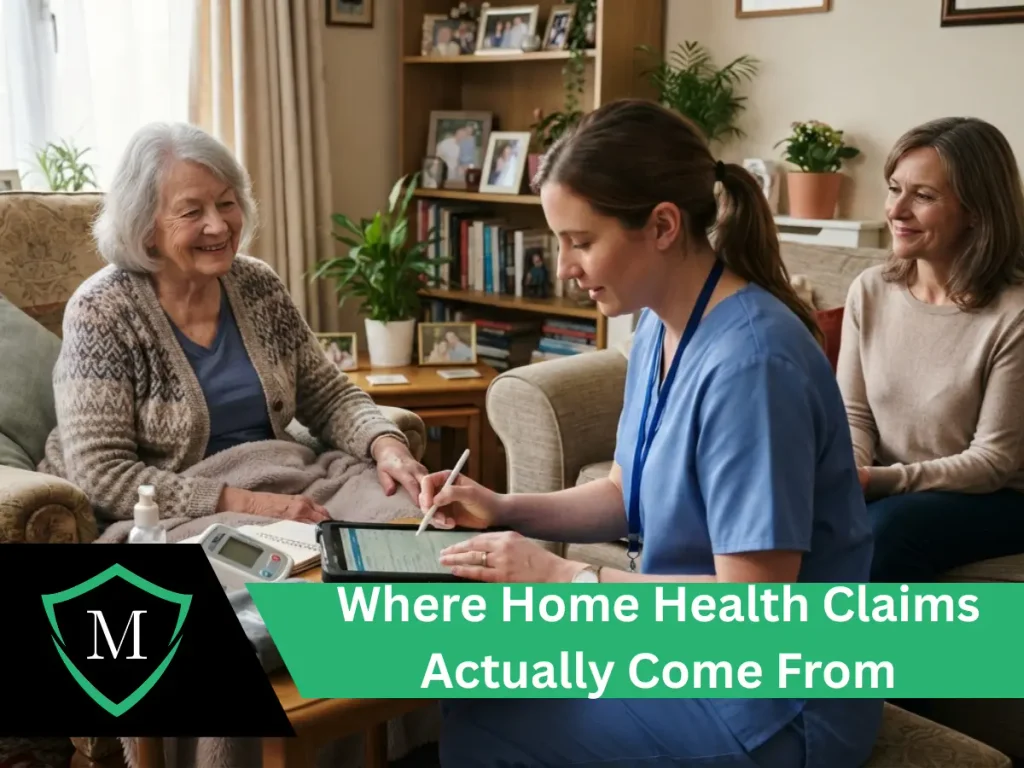
Most claims against home health agencies trace back to a handful of situations, and each one has a practical fix.
Falls During Transfers and Mobility Help
Falls are the injury families sue over most often. Claims usually question whether a fall-risk assessment was done, whether the aide followed the care plan for transfers, and whether the fall was reported and treated quickly. Reassess fall risk whenever a patient’s condition changes, and train staff to report every fall, even when the patient seems fine.
Medication Errors and Outdated Physician Orders
A wrong dose or missed medication often starts with paperwork rather than carelessness: an aide works from an old care plan because the update never reached them. Make sure every change to physician orders reaches the aide before the next visit, and that staff know to stop and ask when instructions don’t match.
Wound Care and Pressure Injuries
When a pressure injury develops or worsens, the claim usually turns on whether skin checks, repositioning, and wound changes were done and recorded. Consistent wound notes and prompt calls to the physician are your best evidence that the care was right.
Missed Changes in a Patient’s Condition
Families often allege that an aide noticed something was wrong but didn’t act. Give staff a clear rule for when to call the nurse supervisor, the physician, or 911, and document every call.
Gaps in Documentation
In a lawsuit, the patient chart is the agency’s main witness. Late, vague, or missing notes can make good care look like neglect. Regular chart audits, as part of a broader risk management program, catch those gaps before an attorney does.
Your Agency Answers for Your Nurses and Aides
When a nurse or aide makes a mistake, the agency is usually named in the lawsuit too, and calling staff independent contractors rarely changes that. Misclassifying aides as 1099 workers can create problems of its own. Hiring and supervision matter as well: a skipped background check or an unverified license can become part of the claim against you.
Individual nurses and home health aides can also be sued personally. An agency policy protects the agency first, so some staff, especially those with clinical duties, carry their own caregiver liability insurance.
Skilled Nursing vs. Non-Medical Home Care
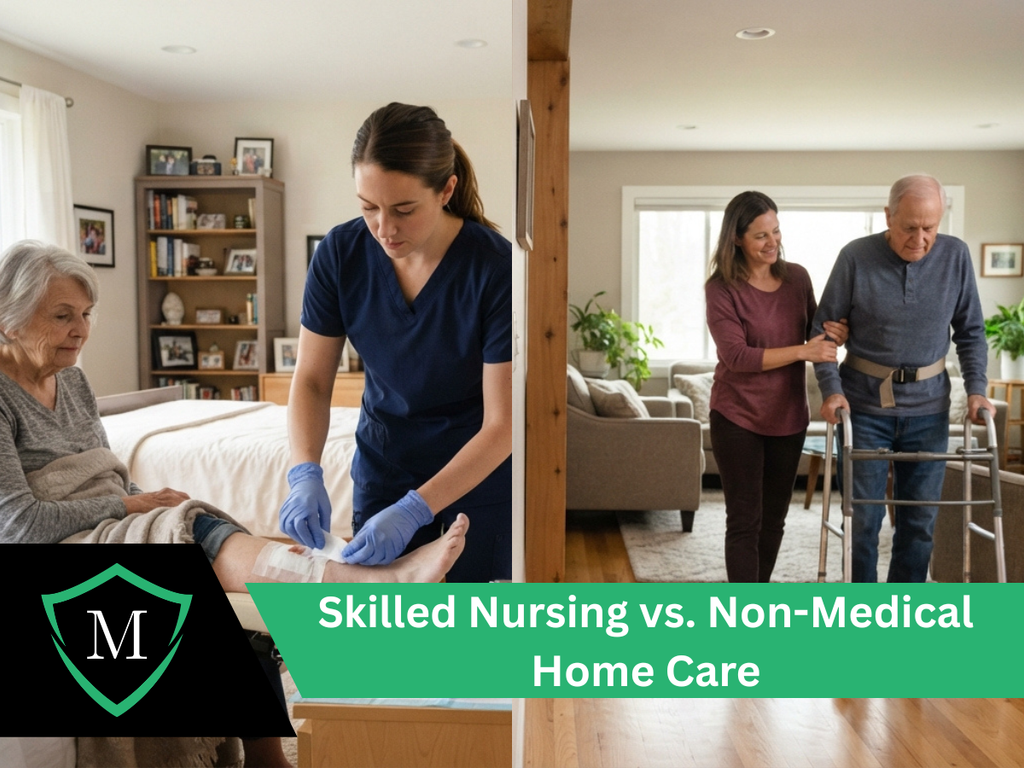
Risk rises with clinical responsibility. An agency offering companionship, meals, and help with daily living faces far fewer care-related claims than one providing wound care, injections, IV therapy, or medication administration. If your non-medical agency is adding skilled services, update your non-medical home care insurance before the first skilled visit, not at renewal.
Home health agencies
Adding skilled services?
Coverage Gaps Agencies Often Miss
Abuse and Molestation
Nurses and aides often work alone with vulnerable patients, which makes abuse allegations a real exposure. Many general liability and malpractice policies exclude these claims or cover them only at a lower limit, and many referral partners now ask for proof of this coverage.
Theft From Patients
Accusations that an aide took cash, jewelry, or medication are among the most frequent claims in home care. They’re handled by a crime bond or employee dishonesty coverage, not by malpractice coverage.
Hired and Non-Owned Auto
If staff drive their own cars to visits or run errands for patients, an accident can lead to a lawsuit naming your agency. The employee’s auto policy protects the employee; hired and non-owned auto protects the agency.
Patient Privacy
A lost phone or a hacked records system can trigger HIPAA investigations and notification costs. Cyber coverage handles these; most malpractice policies don’t.
Free coverage review
Find the gaps in your agency’s coverage before a claim does.
- Abuse and molestation
- Crime bond for theft claims
- Hired and non-owned auto
- Cyber and HIPAA
Is Professional Liability Insurance Required?
There’s no single national rule. Requirements come from your state’s licensing agency (in California, the California Department of Public Health), from Medicare, Medicaid, and managed care contracts, and from the hospitals and referral sources you work with. Even where your license doesn’t set a minimum, most partners will ask for proof of coverage before they send you patients. Check that your per-claim and aggregate limits meet every contract you’ve signed.
What This Means for Your Agency
Good care lowers your risk, but it doesn’t stop claims from being filed. Coverage matched to the services you actually provide keeps one allegation from threatening the whole agency. If you’d like a second look at your current program, McDonough Insurance Services can review your professional liability coverage against your services and contracts. Learn more about our home care insurance programs for agencies.
Frequently Asked Questions
Final Thoughts
In practice, yes. Many states require it for licensing, and most referral partners and payers ask for proof before working with you.
No. Professional liability covers claims about the care you provide; general liability covers accidents like slips and property damage.
Not always, but it helps aides with clinical duties, since an agency policy protects the agency first.
Disclaimer: This article is for general informational purposes only and is not legal, tax, or insurance advice. Coverage options, requirements, and pricing vary by business, industry, location, and carrier, and policy terms always govern. Reading this article does not create coverage or an advisory relationship. For guidance on your specific situation, contact McDonough Insurance Services at 949-361-8471 or request a quote. Our licensed team has helped California businesses find the right coverage since 1981.