
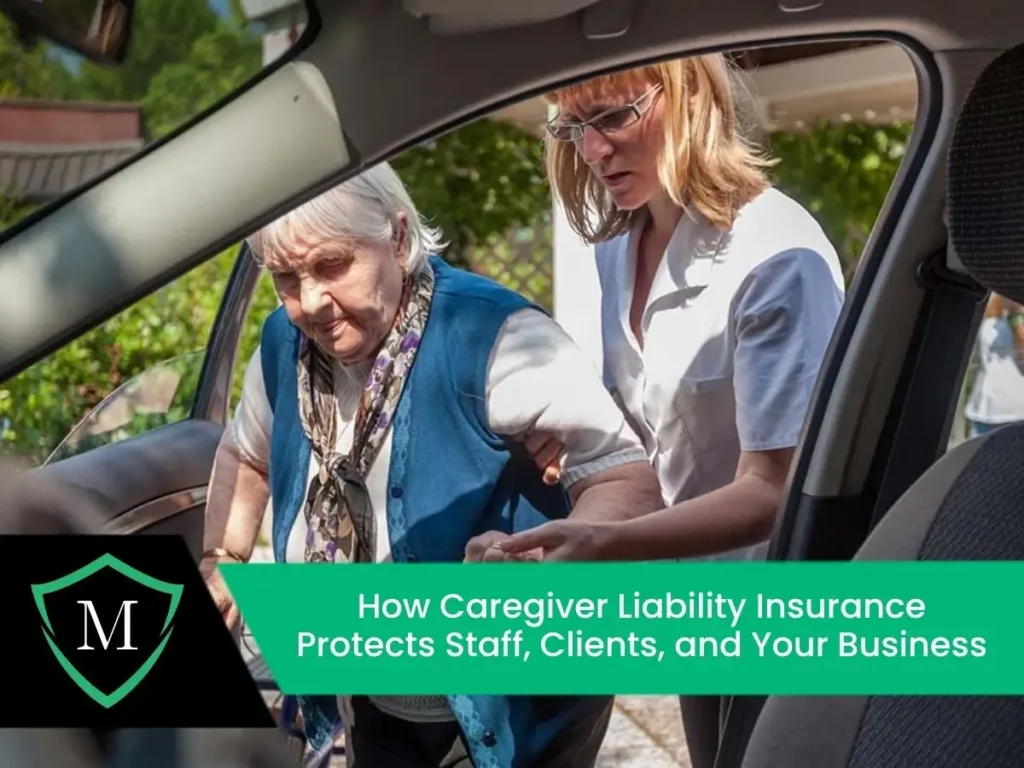
Caregiver liability insurance pays for legal defense, settlements, and medical costs when a client or family claims that a caregiver’s mistake or accident caused an injury or property damage. It protects three groups at once: caregivers who could be named in a lawsuit, clients who deserve a way to be made whole, and the home care business that could otherwise be forced to close by a single claim.
A caregiver may gently help a client walk across a room. A simple slip, a misplaced step, or a misunderstood instruction can turn a moment of care into a costly claim. That is why coverage matters as much as training for anyone who provides in-home care.
Key takeaways
- Caregiver liability insurance pays defense costs, settlements, and medical bills when a caregiver’s mistake or accident harms a client.
- It protects caregivers named in claims, gives clients a path to compensation, and keeps one claim from closing your agency.
- Caregiver injuries, driving accidents, theft, and often abuse allegations need separate coverage.
- Licensed California agencies must carry at least $1M per occurrence and $3M aggregate.

What Is Caregiver Liability Insurance?
Whether you work as a personal care assistant, home health aide, or companion caregiver, helping with bathing, medication reminders, mobility, or daily tasks always carries the chance of an accident, misunderstanding, or unintentional harm. This insurance is designed to cover claims alleging negligence, errors, omissions, or accidents arising during caregiving services. It usually combines two protections:
- General liability: bodily injury or property damage, such as a client falling during a transfer or a caregiver breaking something in the home
- Professional liability: mistakes in the care itself, such as a missed medication reminder, an overlooked care instruction, or a miscommunication with the family. This is often what people mean by professional liability insurance for in-home caregivers.
Most caregivers and agencies need both, and licensed California agencies are required to carry both. Without them, a caregiver or agency could face expensive legal fees and settlements without a safety net.
How It Protects Your Staff
Caregivers who know they are protected work with confidence, not fear, and that translates into better care and stronger retention. Caregivers can be sued personally, because a family’s claim often names the individual caregiver as well as the agency. Liability coverage pays for the caregiver’s legal defense for covered claims, so they are not facing a lawsuit alone.
Liability insurance does not pay for a caregiver’s own injuries, such as a back strain from lifting a client. That is the role of workers’ compensation insurance, which agencies need for their employees.
How It Protects Clients and Families
lients and families want assurance before they welcome a caregiver into their home, and many ask for proof of insurance during intake. If something goes wrong, liability coverage gives them a path to compensation for medical bills or damaged property without a long fight. Common claims include:
- Falls during transfers from a bed, chair, or car
- Medication reminder mix-ups that lead to complications
- Burns, cuts, or other injuries during personal care or meal preparation
- Damage to a client’s home or belongings during a visit
An Example Claim
Picture a caregiver helping a client move from bed to wheelchair. The client slips, falls, and injures a hip, and the family files a claim alleging negligence. Without coverage, a small agency could face legal fees reaching five figures before any settlement, plus reputational damage. With coverage in place, the insurer handles the defense and settlement negotiations, the business stays open, the caregiver keeps their job, and the client’s costs are covered.
How It Protects Your Business
Claims can drain resources fast, from medical settlements to defense costs. Insurance absorbs that financial shock, so one incident does not lead to closure or bankruptcy. Coverage also keeps doors open to new business, because referral sources, facilities, and families often require proof of insurance before they work with an agency.
In California, it is also the law for licensed agencies. Home care organizations must carry general and professional liability insurance of at least $1 million per occurrence and $3 million in the aggregate, along with workers’ compensation for their aides and a $10,000 employee dishonesty bond. Agencies usually carry these protections as part of a broader home care insurance program.
Caregivers and home care agencies
Is your team covered for the claims that happen most?
What Caregiver Liability Insurance May Not Cover
Knowing the gaps matters as much as knowing the coverage. Depending on the policy, you may need separate protection for:
- Caregiver injuries: covered by workers’ compensation, not liability insurance
- Driving clients: personal auto policies may exclude business use, so agencies often add hired and non-owned auto coverage
- Abuse or molestation allegations: frequently excluded from standard liability policies and added separately
- Theft accusations: handled by a dishonesty bond or crime coverage rather than liability
- Intentional harm: not covered by any liability policy
Review these points with your agent before a claim, not after.
Free coverage review
Find the gaps before a claim does.
- Workers’ comp for aides
- Hired and non-owned auto
- Abuse and molestation
- Employee dishonesty bond

Risk Management for Caregivers
Insurance is your safety net. Risk management is your preparation, and it drastically reduces the chance of a costly claim:
- Ongoing training: regular refreshers in safe transfers, client handling, and emergency response.
- Detailed care plans: clear, accurate records that caregivers and families can reference.
- Home safety checks: routine reviews for hazards such as loose rugs, poor lighting, or cluttered walkways, since falls are a common source of claims.
- Written communication: confirm instructions, changes, and concerns with families in writing.
- Incident reporting: track near misses and small issues before they escalate.
A well-executed risk management strategy also builds credibility with clients and can help keep premiums in check. McDonough Insurance Services has over four decades of experience helping California care providers protect their staff and clients. When you are ready to compare options, explore our caregiver liability insurance coverage.
Frequently Asked Questions
Final Thoughts
Usually not. An agency’s policy covers employees while they work for the agency. Caregivers who take private clients on the side need their own coverage for that work.
Unpaid family members usually don’t buy a separate policy, and homeowners or renters insurance may respond to some claims. Family members who are paid to provide care should ask whether they need their own coverage.
Licensed home care agencies in California must carry it. Independent caregivers are not required by state law to have it, but many clients, families, and registries ask for proof before hiring.
Non-medical caregivers generally can’t give injections, provide wound care, or administer medications, because those are skilled medical tasks. Working outside that scope increases liability and may fall outside what your policy covers.