

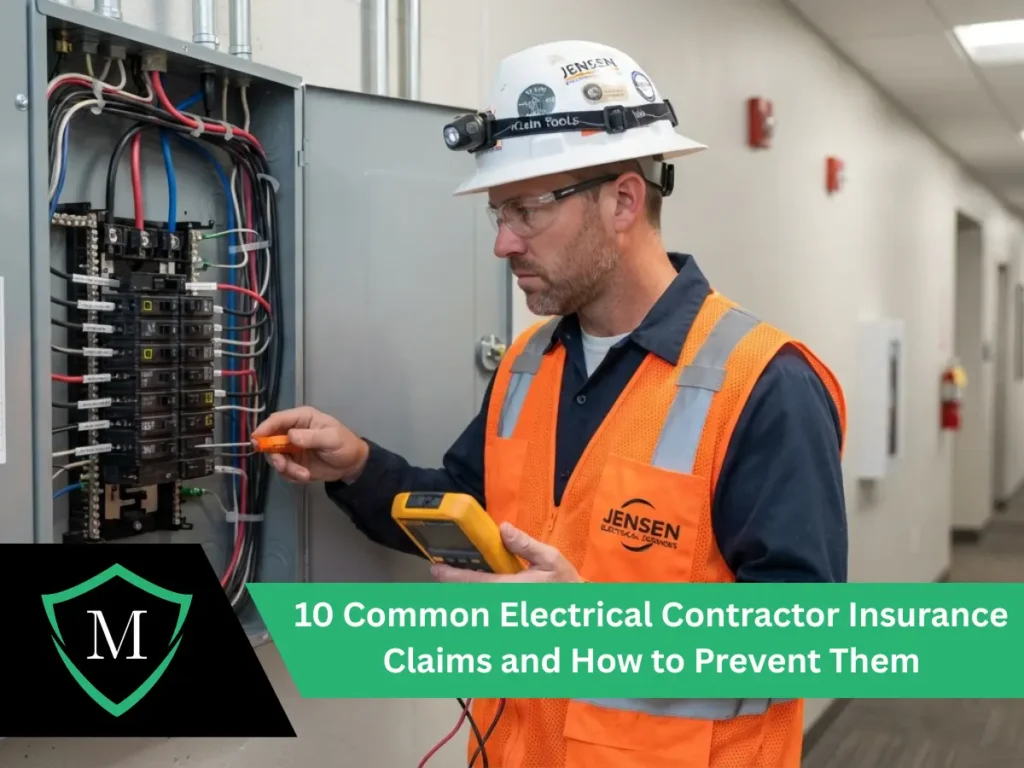
The most common electrical contractor insurance claims come from electrical fires caused by faulty wiring, property damage at a client’s site, injuries to customers and workers, stolen or damaged tools, and vehicle accidents. Most of these claims are preventable with consistent safety habits, good records, and the right coverage in place before work begins.
A single claim can combine medical bills, legal defense, property repairs, and lost income. Knowing where those claims come from helps you protect your crew, your license, and your reputation.
Key takeaways
- Electrical fires, property damage, and injuries to the public are the costliest liability claims electricians face.
- Worker shocks, burns, arc flash, and falls are the most common workplace injuries in the trade.
- Tool theft and equipment damage are frequent, smaller claims that general liability does not cover.
- Following the NEC, enforcing lockout/tagout, and documenting every job prevents most claims.
What Are the Biggest Insurance Risks for Electrical Contractors?
| Claim | Coverage that usually responds | Key prevention step |
|---|---|---|
| Electrical fire from faulty wiring | General liability (completed operations) | Follow the NEC and photograph finished work |
| Damage to a client’s property | General liability | Walk the site and scan walls before drilling |
| Customer or public injury | General liability | Cordon off work areas and close panels |
| Worker shock, burn, or arc flash | Workers’ compensation | Enforce lockout/tagout and PPE |
| Falls from ladders and lifts | Workers’ compensation | Inspect ladders and keep walkways clear |
| Stolen or damaged tools and equipment | Tools and equipment (inland marine) | Lock trucks and keep a serial-number list |
| Company vehicle accident | Commercial auto | Screen drivers and ban phone use |
| Faulty workmanship | General liability, resulting damage only | Test circuits before closing walls |
| Underground utility strike | General liability | Call 811 before digging |
| Design or advice error | Professional liability (E&O) | Put scope and recommendations in writing |
The 10 Most Common Electrical Contractor Claims
1. Electrical Fires From Faulty Wiring
A loose connection, an overloaded circuit, or an undersized breaker can smolder for weeks before it ignites. When a fire traces back to your work, you can be held responsible for the building and everything inside it. These liability claims usually fall under the completed operations part of your general liability policy, and they are often the largest claims electricians face because fire rarely stays in one room.
Prevent it by following the National Electrical Code without shortcuts, torquing connections to spec, labeling panels, and photographing finished work before walls close.
2. Property Damage at a Client’s Site
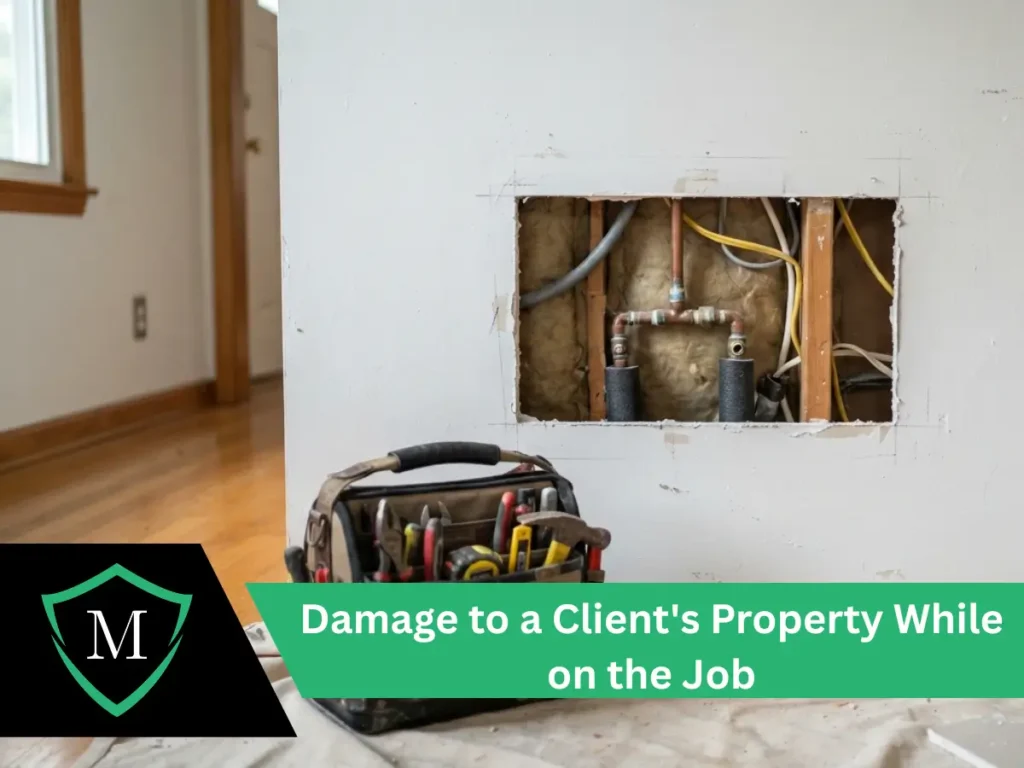
Drilling into a hidden water pipe, cracking tile with a dropped tool, or scorching a finished wall are everyday property damage claims. General liability pays to repair damage you cause to someone else’s property. A pre-job walkthrough, a stud and pipe scan before drilling, and floor and furniture protection prevent most of them.
3. Injuries to Customers and the Public
If a homeowner trips over an extension cord or a passerby touches an exposed wire, you can face a liability claim for medical costs and pain and suffering. General liability covers these third-party injuries and your legal defense. Cordon off work areas, use cord covers and signage, and never leave an open panel unattended.
4. Shocks, Burns, and Arc Flash Injuries
These are the most serious electrical accidents, and your own crew faces them most. Workers’ compensation pays medical bills and lost wages for injured employees. Prevention means strict lockout/tagout, testing before touching, arc-rated PPE, and training to the NFPA 70E standard. OSHA’s electrical safety standards for construction set the baseline.
5. Falls From Ladders and Lifts
Slips, trips, and falls are among the most common workplace injuries in the trade, and they also run through workers’ compensation. A pattern of these claims raises your premiums over time. Inspect ladders and lifts before use, keep walkways clear, and train crews on fall protection.
6. Stolen or Damaged Tools and Equipment
Electricians carry thousands of dollars in tools and test equipment, which makes tool theft from trucks and job sites a frequent claim. General liability does not cover your own gear. A tools and equipment floater, a type of inland marine coverage, pays for theft and equipment damage on the road or at the site. Lock vehicles, tag equipment, and keep a serial-number inventory with photos to speed up a claim.
7. Company Vehicle Accidents
Every mile between jobs is exposure. Commercial auto covers accidents in business vehicles, including injuries to others and damage to the truck. Check driving records before hiring, ban phone use while driving, and secure ladders and materials so nothing falls onto the road.
8. Faulty Workmanship Claims
When work has to be redone, general liability usually pays for the damage the faulty wiring caused, not the cost to fix your own work. That gap surprises many contractors. Testing every circuit before walls close, and documenting the test, is the best protection against callbacks and wiring damage disputes.
9. Striking Underground or Hidden Utility Lines
Trenching for a service line or drilling blind can hit gas, water, or communication lines, leading to repair bills, outages, and injury claims. General liability responds to the third-party damage. Call 811 before every dig and hand-dig near marked lines.
10. Design and Advice Errors
Electricians who design systems, size services, or recommend equipment can face claims that the advice caused a financial loss, even with no physical damage. Those claims fall under professional liability, also called errors and omissions. Put scope, specifications, and recommendations in writing, and have clients sign off on changes.
Electrical contractors
Is your business covered for all 10 of these claims?
How to Prevent Electrical Contractor Claims
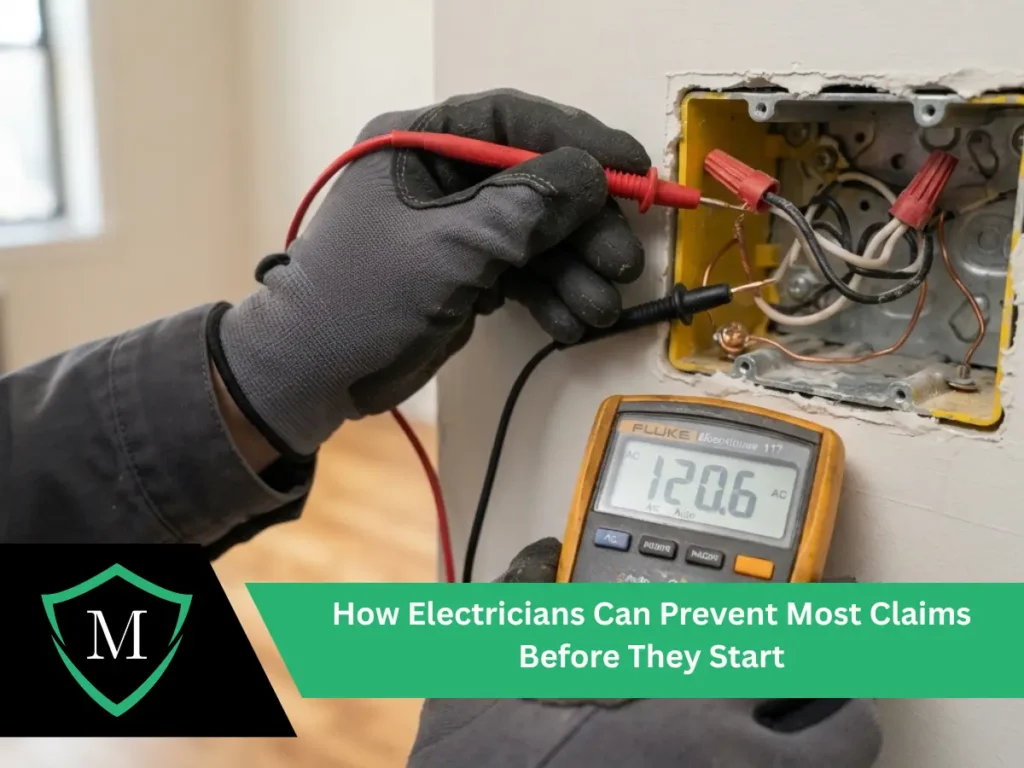
- Follow the code and standards. Work to the NEC, enforce lockout/tagout, and train crews on NFPA 70E.
- Document everything. Photograph work before walls close and keep test results, permits, and change orders.
- Put scope in writing. Clear contracts prevent disputes over what you were hired to do.
- Check your subcontractors. Collect a certificate of insurance before they start, because subcontractors are not automatically covered by your policy.
- Review coverage every year. Update it when you add employees, vehicles, or new types of work.
Free coverage review
Find the gaps in your coverage before a claim does.
- Completed operations
- Tools and equipment floater
- Professional liability (E&O)
- Workers’ comp for your crew
What to Do When a Claim Happens
How you respond in the first hours can shape the outcome of an insurance claim:
- Make the site safe and get medical help for anyone injured.
- Report the incident to your agent or insurer right away, even if you are unsure it will become a claim.
- Take photos, save damaged parts and equipment, and write down what happened while details are fresh.
- Don’t admit fault or promise to pay. Let your insurer handle liability discussions.
- For stolen tools, file a police report and send the serial-number list with your claim.
McDonough Insurance Services has helped California contractors for over 40 years. To make sure your coverage fits the claims in this guide, explore our electrical contractor insurance options, or review the electrician insurance requirements every California contractor should know.
Frequently Asked Questions
Final Thoughts
Disclaimer: This article is for general informational purposes only and is not legal, tax, or insurance advice. Coverage options, requirements, and pricing vary by business, industry, location, and carrier, and policy terms always govern. Reading this article does not create coverage or an advisory relationship. For guidance on your specific situation, contact McDonough Insurance Services at 949-361-8471 or request a quote. Our licensed team has helped California businesses find the right coverage since 1981.