
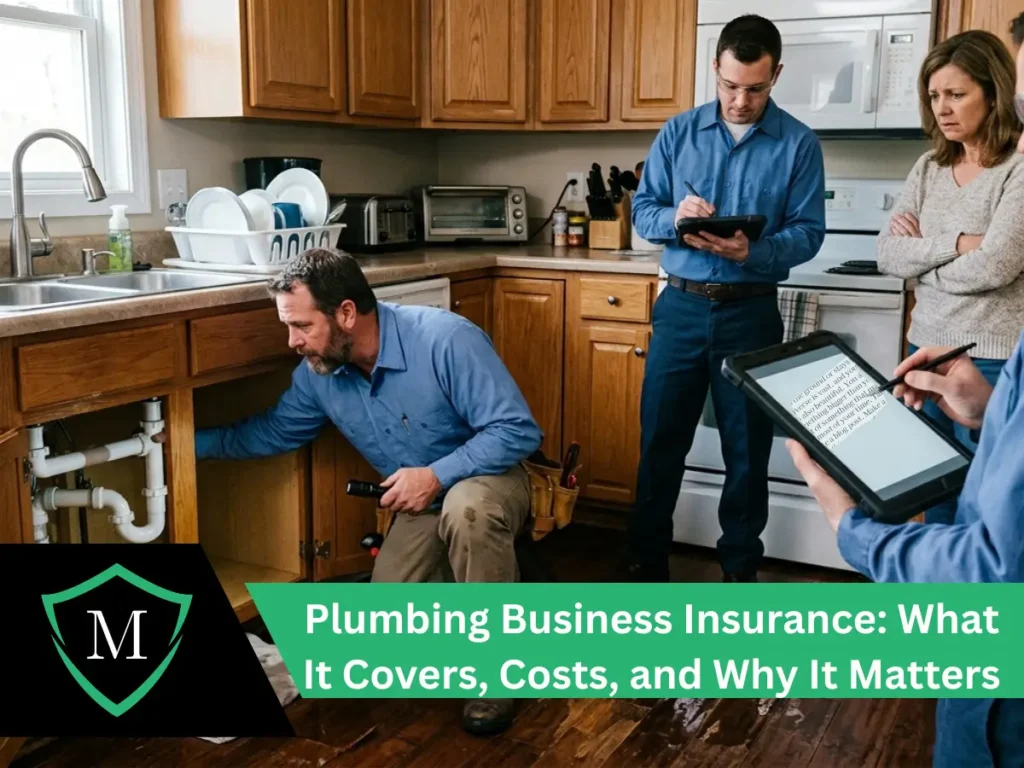
Every plumbing job puts water, pressure, and a customer’s property in your hands. When something goes wrong, the bill for repairs, legal defense, or medical care can land on your business instead of an insurer.
Business insurance for plumbers helps contractors manage these risks by combining several commercial policies. At a minimum, most plumbing businesses carry general liability insurance, workers’ compensation once they have employees, and commercial auto for work vehicles. The right mix depends on the size of the company, type of plumbing work, equipment, and project requirements.
This guide explains what plumbing business insurance covers, what affects the cost, and why the right coverage matters for residential and commercial plumbing businesses.
Key takeaways
- Most plumbing businesses start with general liability, workers’ comp once they hire, and commercial auto, then add tools coverage, a BOP, or professional liability as they grow.
- General liability pays for damage your work causes, not the cost to redo the work itself.
- Premiums depend on your services, payroll, vehicles, claims history, and limits. Commercial work usually costs more to insure.
- In California, workers’ comp and bonding are tied to your CSLB license, and a coverage lapse suspends it.
What Is Plumbing Business Insurance?
Plumbing business insurance is commercial insurance for plumbers and plumbing companies. It protects contractors from financial losses tied to their work, such as property damage claims, customer injuries, employee accidents, vehicle accidents, and stolen tools.
For a self-employed plumber with one truck, small business insurance for plumbers may mean two or three policies. A plumbing company with employees, a shop, and commercial contracts usually needs more. Requirements also vary by state licensing rules and by what customers or general contractors ask for in writing.
What Does Plumbing Business Insurance Cover?
There is no single insurance policy that covers every plumbing risk. Most contractors combine the following types of coverage based on their operations.
General Liability: Damage and Injuries Your Work Causes
Plumbing general liability insurance protects your business from third-party claims involving bodily injury or property damage, including legal costs. For example, if a repair causes water damage to a customer’s home, or a visitor trips over your equipment at a job site, general liability may help pay eligible claim expenses.
Ask for products-completed operations coverage as part of the policy. Sometimes called product liability insurance for plumbers, it applies when damage appears after the job is finished, such as a fitting that starts leaking weeks later. Many commercial customers and general contractors require proof of liability insurance for plumbers before work begins. For limits and claim examples, see our guide to plumbing liability insurance.
Workers’ Compensation: Injuries to Your Employees
Workers’ compensation insurance helps cover medical expenses and partial lost wages when employees experience work-related injuries or illnesses. Plumbing involves physical work, ladders, trenches, and tight crawl spaces, so injury risk is real even for experienced crews.
Commercial Auto: Vans and Service Trucks
Plumbing companies use vans and trucks to transport tools, materials, and employees. Commercial auto insurance covers accidents, vehicle damage, and liability claims involving vehicles used for business. Personal auto policies may exclude commercial use, which can leave a claim unpaid.
Tools and Equipment: Gear Away From Your Shop
Drain cleaning machines, pipe inspection cameras, and specialty tools represent a significant investment. Inland marine insurance, often called tools and equipment coverage, protects portable equipment while it is in your van, at a job site, or in transit. If a work truck is stolen with tools inside, commercial auto covers the vehicle, while this coverage handles the tools.
Business Owner’s Policy: Property and Lost Income
A business owner’s policy for plumbers combines several common coverages into one package, often at a lower cost than buying them separately. A typical BOP includes:
- General liability insurance
- Commercial property insurance for your shop, office, and stored inventory such as pipe, fittings, and water heaters
- Business interruption insurance, which helps replace lost income if a covered event, like a fire at your shop, forces you to pause operations
A BOP suits small plumbing businesses with a physical location, but it does not include commercial auto or workers’ compensation. Our comparison of general liability vs. a business owner’s policy explains when each makes sense.
Professional Liability: Design and Advice Errors
Some plumbing companies provide services beyond installation and repairs, such as system design, inspections, or consulting. Professional liability insurance may help protect against claims that a mistake in that advice or design caused a financial loss. It matters most for design-build and consulting work rather than standard repair calls.
What Does Plumbing Business Insurance Not Cover?

Insurance policies have exclusions, meaning certain situations may not be covered. Common exclusions include:
- Intentional damage
- Normal wear and tear
- Poor maintenance
- Certain flood-related losses
- Fixing defective workmanship itself
For example, general liability may cover water damage caused by a failed joint, but it typically does not pay to redo the joint. Some policies also limit or exclude mold claims, which matters for plumbers because slow leaks often lead to mold. Review these limits before you buy.
How Much Does Plumbing Business Insurance Cost?
There is no standard price because every business has different risks and coverage needs. Insurance is a steady operating cost, like vehicles and licensing, and the premium is shaped by:
- Type of plumbing services provided
- Business size and annual revenue
- Number of employees and payroll
- Number of vehicles
- Claims history
- Location
- Coverage limits and deductibles
A self-employed residential plumber who needs only general liability will usually pay far less than a company with employees, a fleet, and a commercial property. The most reliable way to know your plumbing business insurance cost is a quote based on your actual operations.
Residential vs. Commercial Plumbing Insurance

Commercial plumbing insurance usually costs more than coverage for residential work because the projects, contracts, and liability exposure are larger.
| Residential Plumbing | Commercial Plumbing |
|---|---|
| Homes and small properties | Offices, buildings, and large facilities |
| Smaller service calls | Larger projects and contracts |
| Lower equipment requirements | Higher equipment and liability exposure |
| Individual customers | Property owners and general contractors |
Contractors and subcontractors
Need coverage that meets your next subcontract?
Why Plumbing Business Insurance Matters
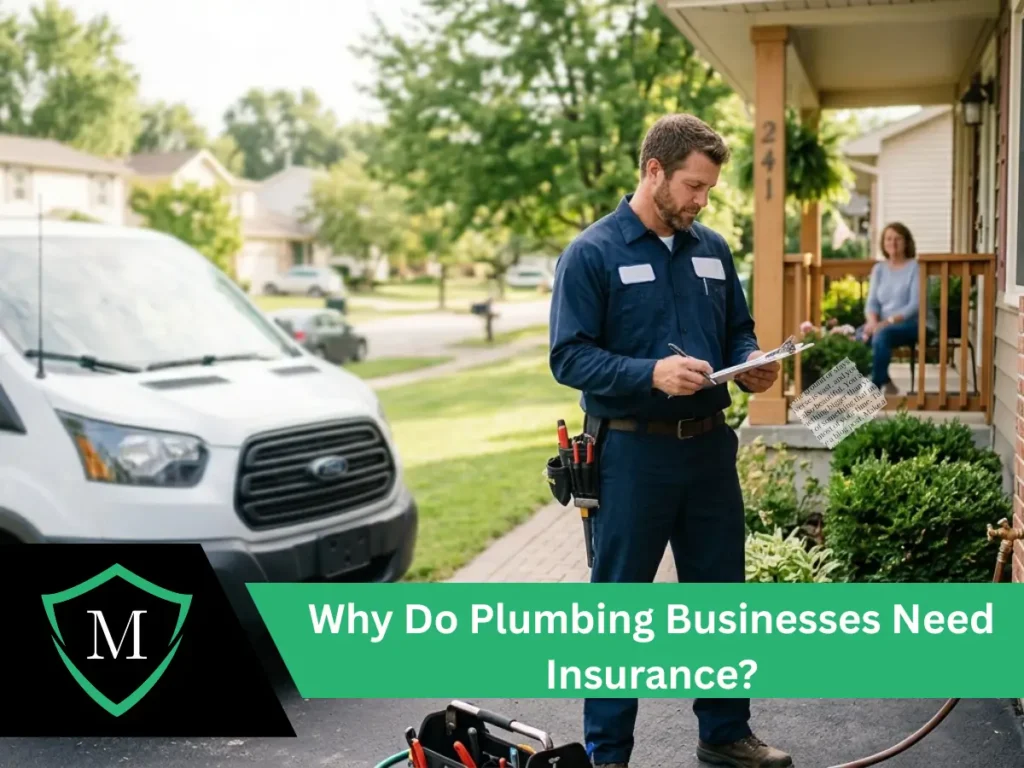
Coverage protects your cash flow. An uninsured claim is paid from the same funds that cover payroll, materials, and new equipment, so one bad job can slow the whole business down.
Insurance also affects whether you can get the job. General contractors and property owners often request a certificate of insurance showing active coverage before work starts, and commercial contracts may require you to name the client as an additional insured.
California License and Insurance Rules
In California, insurance is tied directly to your contractor license through the Contractors State License Board (CSLB):
- Licensees must keep a certificate of workers’ compensation insurance on file, or an exemption if they have no employees. A lapse in coverage suspends the license.
- Starting January 1, 2028, workers’ compensation is scheduled to be required for all licensed contractors, even those without employees.
- Every licensee needs a $25,000 contractor license bond.
- Contractors licensed as an LLC must carry at least $1 million in liability insurance, increasing with personnel up to $5 million.
Review current rules through the CSLB workers’ compensation page and the California Department of Industrial Relations.
Before your next renewal
Check your coverage against your license and contracts.
We will review your policies for the gaps that catch plumbing businesses most often and show you what is missing.
- Completed operations
- Hired and non-owned auto
- Tools and equipment
- CSLB workers’ comp filing
How to Choose Insurance for Your Plumbing Business
The right coverage starts with understanding the risks specific to your business. Before requesting quotes, have your annual revenue, payroll, number of employees, vehicle details, and the types of jobs you take ready. Then:
- Match coverage to the work you do, including residential and commercial jobs.
- Check contract requirements for minimum limits and additional insured status.
- Compare exclusions and limits, not just price.
- Insure tools and vehicles for their real replacement value.
- Update coverage as you add employees, vehicles, services, or larger projects.
Working with an independent insurance agency can help you compare options and find gaps before a claim does. McDonough Insurance Services is a family-owned independent agency that has helped contractors since 1981. When you are ready to compare options, explore our plumber insurance coverage.
Frequently Asked Questions
Final Thoughts
No. Malpractice insurance is for medical providers. The closest coverage for plumbers is professional liability.