
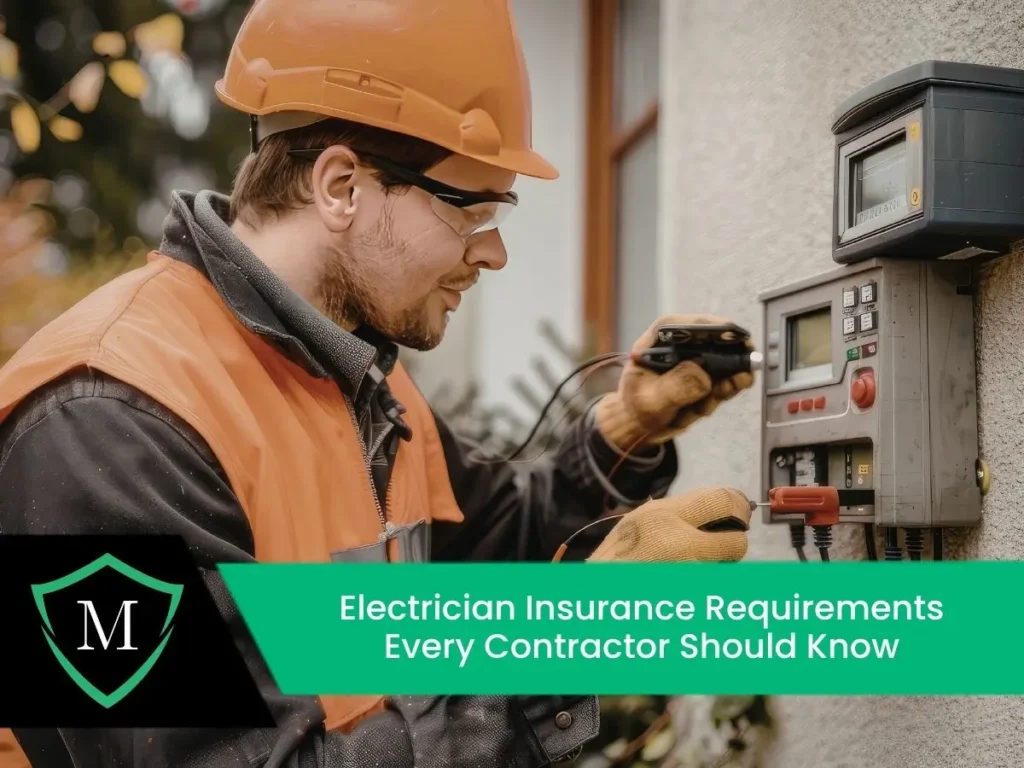
Electrician insurance requirements come from two places: the state and your customers. In California, licensed electrical contractors must keep workers’ compensation on file (or an exemption if they have no employees) and a $25,000 contractor bond, and LLCs must also carry liability insurance. Most general contractors and commercial clients add their own requirement, usually general liability of at least $1 million per occurrence.
Being an electrician is about managing risks that come with live currents, high equipment costs, and client safety. One spark of negligence can lead to costly claims, property damage, or even injury. Whether you’re a solo contractor or manage a team, knowing which requirements apply to you keeps your license active and your bids competitive.
| Requirement | Required by | Who it applies to |
|---|---|---|
| C-10 electrical contractor license | CSLB | Jobs that need a permit, use employees, or cost $1,000 or more |
| $25,000 contractor license bond | CSLB | All licensees |
| Workers’ comp certificate or exemption | CSLB | All licensees (exemption allowed with no employees, until 2028) |
| Liability insurance ($1M to $5M) and $100,000 worker bond | CSLB | Licensees operating as an LLC |
| State-certified electricians | Labor Code 108.2 | Anyone doing electrical work for a C-10 contractor |
| General liability, often $1M per occurrence | Clients and contracts | Most general contractor and commercial jobs |
Key takeaways
- California requires a C-10 license, a $25,000 bond, and a workers’ comp certificate or exemption on file with CSLB.
- General liability isn’t legally required unless you’re an LLC, but most clients ask for at least $1 million per occurrence.
- Everyone doing electrical work for a C-10 contractor must be certified, an apprentice, or a registered trainee.
- Read every contract’s insurance section for endorsements like additional insured and waiver of subrogation.
What Insurance Is Legally Required for Electricians in California?
California ties several requirements directly to your contractor license through the Contractors State License Board (CSLB).
Contractor’s License and Bond
A C-10 electrical contractor license is required for any job that needs a building permit, uses employee labor, or costs $1,000 or more in labor and materials. Every licensee must also keep a $25,000 contractor license bond on file.
Workers’ Compensation
Licensees must file a certificate of workers’ compensation insurance with CSLB, or an exemption if they have no employees. A lapse in coverage suspends the license. Starting January 1, 2028, workers’ compensation is scheduled to be required for all licensed contractors, even those without employees.
Workers’ comp pays for medical treatment and partial lost wages when an employee is injured by shocks, falls, or burns, and it generally protects the business from being sued directly over a workplace injury. For official details, see the California Department of Industrial Relations.
Liability Insurance for LLCs
Electrical contractors licensed as an LLC must carry liability insurance of at least $1 million, increasing with the number of personnel up to $5 million, plus a $100,000 employee/worker bond. If you are a self-employed electrician without employees, the state requires your license, bond, and a workers’ comp exemption on file. General liability is not legally required for sole proprietors or corporations, but you will need it to win most contracts.
Certified Electricians on Your Crew
This is not an insurance rule, but it affects every C-10 contractor. Under California Labor Code section 108.2, people who do electrical work for a C-10 contractor must be state-certified electricians, registered apprentices, or registered electrician trainees. The license’s qualifying person is exempt. Willfully employing uncertified workers can lead to discipline against your license.
Electrical contractors General liability and BOP quotes
Not sure your filings are current?
What Insurance Do Clients and Contracts Require?
Legal minimums are only the starting point. General contractors, property managers, and commercial clients usually set their own electrical contractor insurance requirements in writing before you can start work. Common requests include:
- General liability: typically $1 million per occurrence, often with a $2 million aggregate
- Commercial auto: for vans and trucks used on the job, sometimes with hired and non-owned auto coverage
- Workers’ compensation: proof of active coverage for your crew, even on short jobs
- Umbrella coverage: higher limits for larger commercial or public projects
- Contract endorsements: naming the client as an additional insured, a waiver of subrogation, or primary and noncontributory wording
You will usually prove this with a certificate of insurance. Read the insurance section of every contract before you sign, because a missing endorsement can delay payment or cost you the job.
What Your Liability Policy Should Include
Liability insurance for electricians should cover three things clients care about most:
- Bodily injury: medical costs and legal fees if someone is hurt on your job site
- Property damage: repairs or replacement if your work damages a client’s property
- Completed operations: protection after a project is finished, such as a fire traced back to your wiring months later
Many electricians also carry coverage for tools, vehicles, professional errors, and cyber incidents. For a full breakdown of those options, see our electrical contractor insurance page.
Before your client catches it
Check your coverage against the contract before you sign.
- $1M / $2M general liability
- Additional insured endorsements
- Waiver of subrogation
- Umbrella limits
How to Stay Compliant With Electrician Insurance Requirements
Navigating California regulations can feel like threading a needle through live wires. These habits keep your license, contracts, and coverage aligned:
- Keep your license, bond, and workers’ comp filing current. A lapse in any of them can stop work immediately.
- Track crew certifications. Confirm every electrician on your payroll is certified, an apprentice, or a registered trainee.
- Keep certificates updated. Send new certificates when policies renew so clients never hold payment over expired coverage.
- Require coverage from subcontractors. Collect their certificates before they start, because subcontractors are not automatically covered under your policies.
- Pair insurance with risk management. Safety training, jobsite inspections, and accurate records reduce claims and keep premiums in check.
- Review coverage every year. Update it when you hire, add vehicles, take on commercial work, or expand into new services.
McDonough Insurance Services has helped California contractors meet these requirements for over 40 years. When you are ready to compare options, explore our electrician insurance coverage built around your license, crew, and contracts.
Frequently Asked Questions
Final Thoughts
Liability policies usually cover work anywhere in the U.S., but workers’ compensation is state specific. Ask your agent to add other-states coverage, and check that state’s licensing rules before you bid.
Not when they work as employees, since the employer’s policies cover them. A journeyman who takes side jobs of $1,000 or more needs a C-10 license and their own coverage.
No. Malpractice insurance is for medical providers. Electricians who design systems or give technical advice may need professional liability, also called errors and omissions.
Often, yes. A business owner’s policy can bundle liability, property, and business interruption coverage. Our general liability vs. BOP guide explains when it fits.
Disclaimer: This article is for general informational purposes only and is not legal, tax, or insurance advice. Coverage options, requirements, and pricing vary by business, industry, location, and carrier, and policy terms always govern. Reading this article does not create coverage or an advisory relationship. For guidance on your specific situation, contact McDonough Insurance Services at 949-361-8471 or request a quote. Our licensed team has helped California businesses find the right coverage since 1981.