

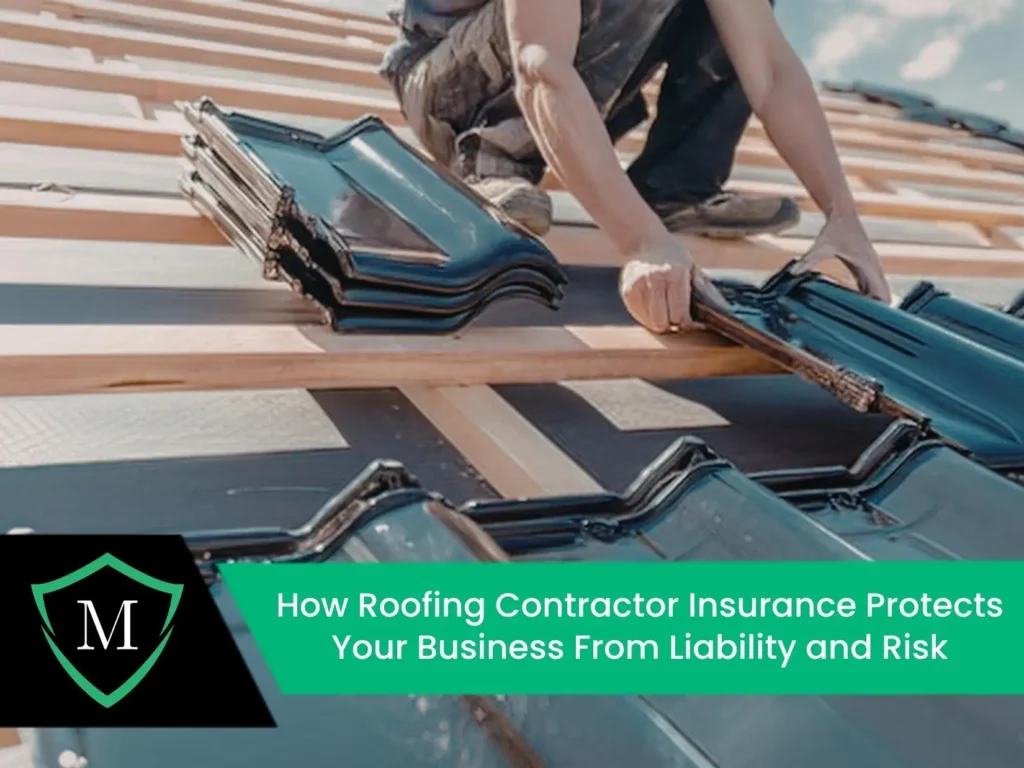
Roofing contractor insurance protects your business by paying for the claims roofers face most: injuries to your crew from falls, damage to a customer’s home from leaks or falling debris, accidents in work trucks, and stolen tools and equipment. In California, licensed roofing contractors must also carry workers’ compensation even if they have no employees.
A roofing job doesn’t start when the ladder goes up. It starts the moment you take responsibility for someone’s home. One loose shingle, one misstep on a steep slope, or one unexpected storm can turn a routine project into a costly problem.
Key takeaways
- Falls are the leading cause of death in construction, so injuries to your crew are a roofer’s biggest risk.
- California requires C-39 roofing contractors to carry workers’ compensation, even with no employees.
- Leaks that show up after a job is finished fall under completed operations coverage, which should be part of your liability policy.
- Check your policy for exclusions on height, hot work, or project types before you sign a contract.
Why Roofing Carries More Risk Than Most Trades
Roofers work at height, on steep surfaces, with heavy materials and changing weather. OSHA identifies falls as the leading cause of death in construction and requires fall protection when workers are 6 feet or more above a lower level. Its Stop Falls resources explain how to plan for it.
Physical danger is only half the picture. A single incident can lead to medical bills, property damage claims, legal disputes with homeowners, and project delays. Without coverage, those costs land directly on your business.
How Each Coverage Protects a Roofing Business
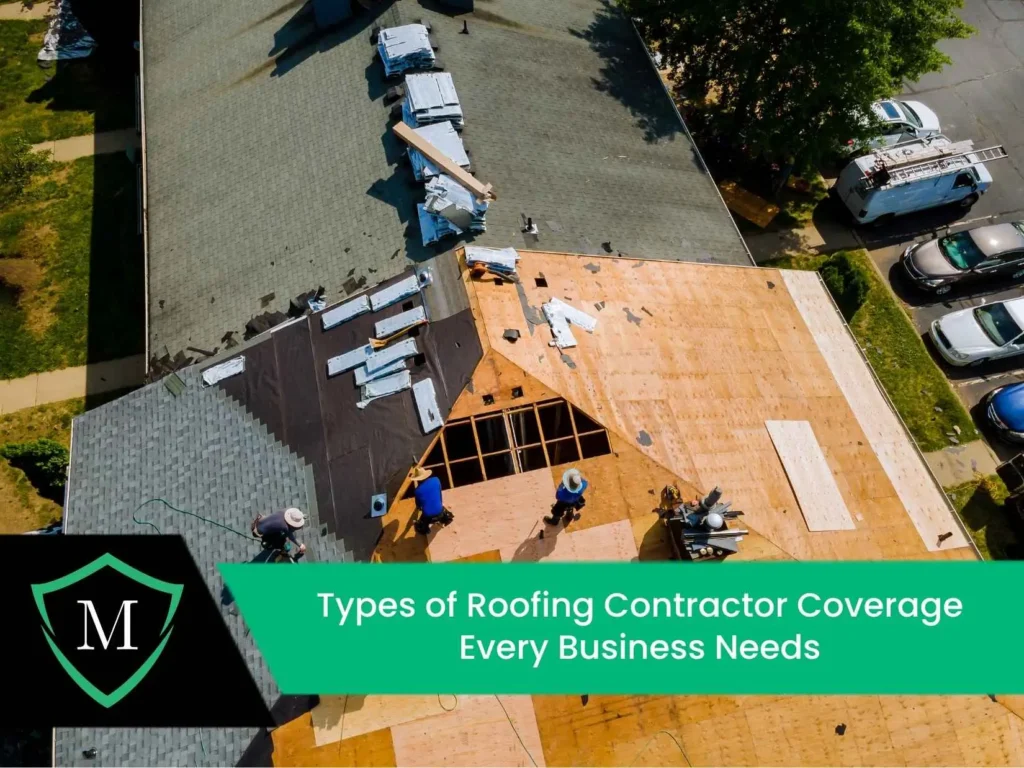
| What happens | Coverage that usually responds |
|---|---|
| A crew member falls from a roof | Workers’ compensation |
| Falling shingles damage a car in the driveway | General liability |
| A leak damages the home weeks after the job | General liability (completed operations) |
| A work truck causes an accident | Commercial auto |
| Your tool trailer is stolen from a job site | Tools and equipment (inland marine) |
| A storm damages materials stored at your shop | Commercial property |
| A large claim exceeds your liability limits | Umbrella or excess liability |
Completed Operations: When a Leak Shows Up Months Later
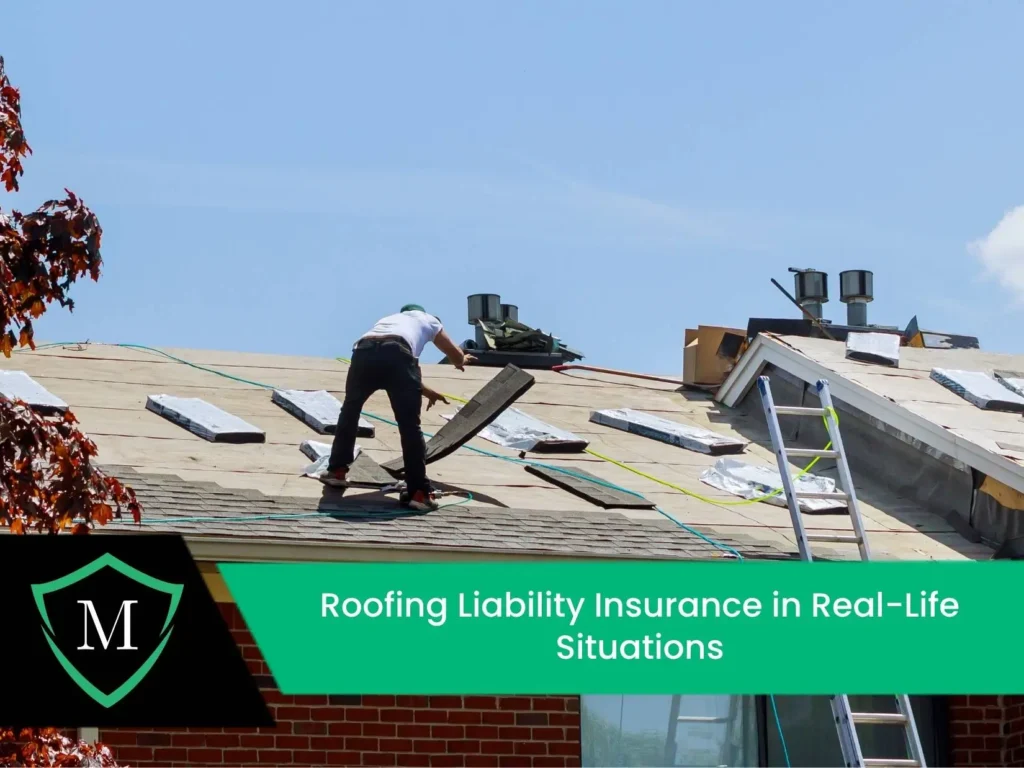
Picture this: you finish a roof, and two weeks later a storm hits and water leaks into the home. The homeowner blames your installation. Completed operations coverage, part of most general liability policies, responds to that kind of claim, including legal defense. It usually pays for the resulting water damage, not the cost to redo your own work, so it pays to confirm completed operations is included and not limited.
Workers’ Compensation for Your Crew
Workers’ compensation pays for medical treatment, rehabilitation, and lost wages when an employee is hurt on the job, and it generally protects the business from being sued directly over the injury. Calling roofers 1099 contractors doesn’t settle the question, because the actual working relationship does. Our guide to 1099 vs. W-2 misclassification explains the risk.
Roofing Contractor Insurance Requirements in California
Some coverage is required by law, and more is required by the people who hire you:
- Workers’ compensation: C-39 roofing contractors must carry it regardless of whether they have employees, according to the Contractors State License Board.
- Contractor license bond: every licensee needs a $25,000 contractor license bond.
- LLC liability insurance: contractors licensed as an LLC must carry at least $1 million in liability insurance, increasing with personnel up to $5 million.
- Contract requirements: general contractors, property managers, and commercial clients usually ask for proof of liability coverage through a certificate of insurance before work begins, often with additional insured status.
Roofing contractors
Need to meet California’s C-39 requirements?
Get workers’ comp and liability coverage built for roofing work, at competitive rates.
Coverage Gaps Roofers Often Miss
Choosing the cheapest policy can leave holes that only show up after a claim. Before you buy or renew, check for:
- Height or project limits: some roofing liability policies restrict work above a certain number of stories or exclude certain project types.
- Hot work: torch-down and other heat-applied work may be excluded or need specific coverage.
- Subcontractors: subcontractors aren’t automatically covered by your policy, so collect their certificates first.
- Work in progress: materials and partly finished roofs may need builder’s risk or an installation floater, since general liability does not cover them.
- Pollution: tear-off debris and some older materials can create contamination claims that general liability excludes.
Free coverage review
Check your roofing policy for gaps before a claim does.
- Completed operations
- Height and hot work exclusions
- Subcontractor certificates
- Builder’s risk for work in progress
Managing Risk on the Roof
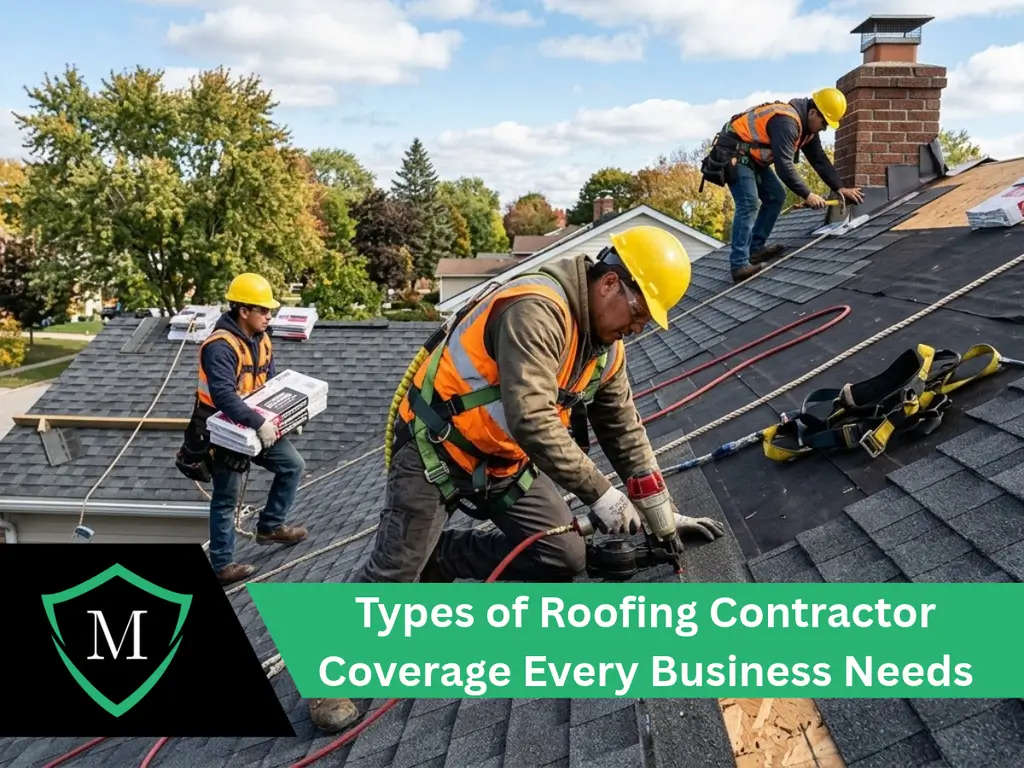
Good risk management lowers claims and helps keep premiums in check:
- Plan fall protection for every job, and make sure crews use it.
- Watch the weather, and tarp open roofs before you leave the site.
- Inspect ladders, lifts, and vehicles before each use.
- Document every job with photos before, during, and after the work.
- Verify subcontractor coverage before anyone steps onto the roof.
Protecting Your Roofing Business
Roofing will always involve risk, but financial disaster doesn’t have to. Contractors who treat insurance as part of their business strategy, not just a line item, are the ones who stay in business and grow.
McDonough Insurance Services has helped California contractors manage risk for over 40 years. If you’d like a second look at your coverage, we can review your roofing contractor insurance against the work you do and the contracts you sign.
Frequently Asked Questions
Final Thoughts
Disclaimer: This article is for general informational purposes only and is not legal, tax, or insurance advice. Coverage options, requirements, and pricing vary by business, industry, location, and carrier, and policy terms always govern. Reading this article does not create coverage or an advisory relationship. For guidance on your specific situation, contact McDonough Insurance Services at 949-361-8471 or request a quote. Our licensed team has helped California businesses find the right coverage since 1981.