

Plumbing businesses face risks that go beyond completing repairs and installations. A damaged pipe, customer injury, stolen equipment, or vehicle accident can create unexpected expenses that impact daily operations.
Plumbing business insurance helps contractors manage these risks by providing financial protection through different commercial insurance policies. The right coverage depends on the size of the company, type of plumbing work, employees, vehicles, equipment, and project requirements.
This guide explains the insurance coverage plumbers commonly need, what affects costs, and important considerations for residential and commercial plumbing contractors.
What Is Plumbing Business Insurance?
Plumbing business insurance is commercial insurance designed to protect plumbing contractors from financial losses related to their work.
It usually includes multiple policies that address different risks, such as property damage claims, customer injuries, employee accidents, business vehicles, tools, and lawsuits.
A self-employed plumber may need different coverage than a plumbing company with employees and commercial contracts. Insurance requirements also vary depending on state regulations, licensing requirements, and agreements with customers or general contractors.
Why Do Plumbing Businesses Need Insurance?

Plumbing work involves situations where mistakes or accidents can become expensive. A small issue, such as a leaking connection, can result in major water damage inside a customer’s property.
Insurance helps protect a business from costs related to covered claims. Without proper coverage, a contractor may have to pay legal expenses, repairs, medical bills, or replacement costs directly from business funds.
Common risks for plumbing contractors include:
- Accidental water damage
- Customer property damage claims
- Workplace injuries
- Vehicle accidents
- Theft or damage to equipment
- Lawsuits related to completed work
What Insurance Coverage Does a Plumbing Business Need?

There is no single insurance policy that covers every plumbing risk. Most contractors combine different types of coverage based on their operations.
General Liability Insurance
General liability insurance protects plumbing businesses from third-party claims involving bodily injury or property damage.
For example, if a plumbing repair causes water damage to a customer’s home or a visitor is injured at a job site, general liability coverage may help pay eligible claim expenses, including legal costs.
Many commercial customers and contractors require proof of general liability insurance before allowing plumbing work to begin.
Commercial Auto Insurance
Plumbing companies often use vans, trucks, and other vehicles to transport tools, materials, and employees.
Commercial auto insurance is designed for vehicles used for business purposes. It may provide protection for accidents, vehicle damage, and liability claims involving company vehicles.
Using personal auto insurance for business operations can create coverage problems because personal policies may exclude commercial use.
Workers’ Compensation Insurance
Workers’ compensation insurance helps provide benefits when employees experience covered work-related injuries or illnesses.
Plumbing involves physical work, heavy equipment, ladders, and job-site hazards. Workers’ compensation can help cover medical expenses and partial lost wages while also helping businesses meet state requirements.
In California, businesses with employees are generally required to carry workers’ compensation insurance. Requirements can vary depending on the business structure and employment situation.
Tools and Equipment Coverage
Plumbing equipment is essential to daily operations and can represent a significant investment.
Coverage such as inland marine insurance may protect portable tools and equipment used away from a business location. This can include items such as drain cleaning machines, pipe inspection cameras, and specialty tools.
Protecting equipment is especially important for contractors who rely on expensive tools to complete jobs.
Business Owner’s Policy (BOP)
A Business Owner’s Policy combines several common business coverages into one package.
A typical BOP may include:
- General liability insurance
- Commercial property insurance
- Business interruption coverage
This type of policy is often considered by small businesses looking for broader protection. Additional coverage, such as commercial auto or workers’ compensation, may still be needed depending on business operations.
Professional Liability Insurance
Some plumbing companies provide services beyond installation and repairs, such as consulting, system planning, or design recommendations.
Professional liability insurance may help protect businesses from claims involving mistakes, errors, or professional advice that causes financial loss.
This coverage is more relevant for plumbing companies involved in specialized services rather than standard repair work.
What Does Plumbing Insurance Not Cover?
Insurance policies have exclusions, meaning certain situations may not be covered.
Common exclusions may include:
- Intentional damage
- Normal wear and tear
- Poor maintenance
- Certain flood-related losses
- Fixing defective workmanship itself
For example, general liability insurance may cover resulting damage caused by faulty work, but it typically does not cover the cost of replacing improperly installed work.
Understanding exclusions is important because it helps contractors avoid unexpected coverage gaps.
How Much Does Plumbing Insurance Cost?
The cost of plumbing insurance depends on several factors. There is no standard price because every business has different risks and coverage needs.
Factors that influence insurance costs include:
- Type of plumbing services provided
- Business size and annual revenue
- Number of employees
- Claims history
- Location
- Coverage limits
- Deductibles
- Number of vehicles
- Commercial versus residential projects
A small residential plumber working alone will usually have different insurance needs compared with a larger company handling commercial construction projects.
California Plumbing Insurance Considerations
California plumbing contractors may have additional insurance considerations based on licensing, employees, and contract requirements.
Businesses working on larger projects may need to provide proof of insurance before starting work. General contractors and property owners often request certificates of insurance showing active coverage.
California contractors should review current requirements through official state resources, including the California Department of Industrial Relations for workers’ compensation information and employment-related requirements.
Residential vs. Commercial Plumbing Insurance
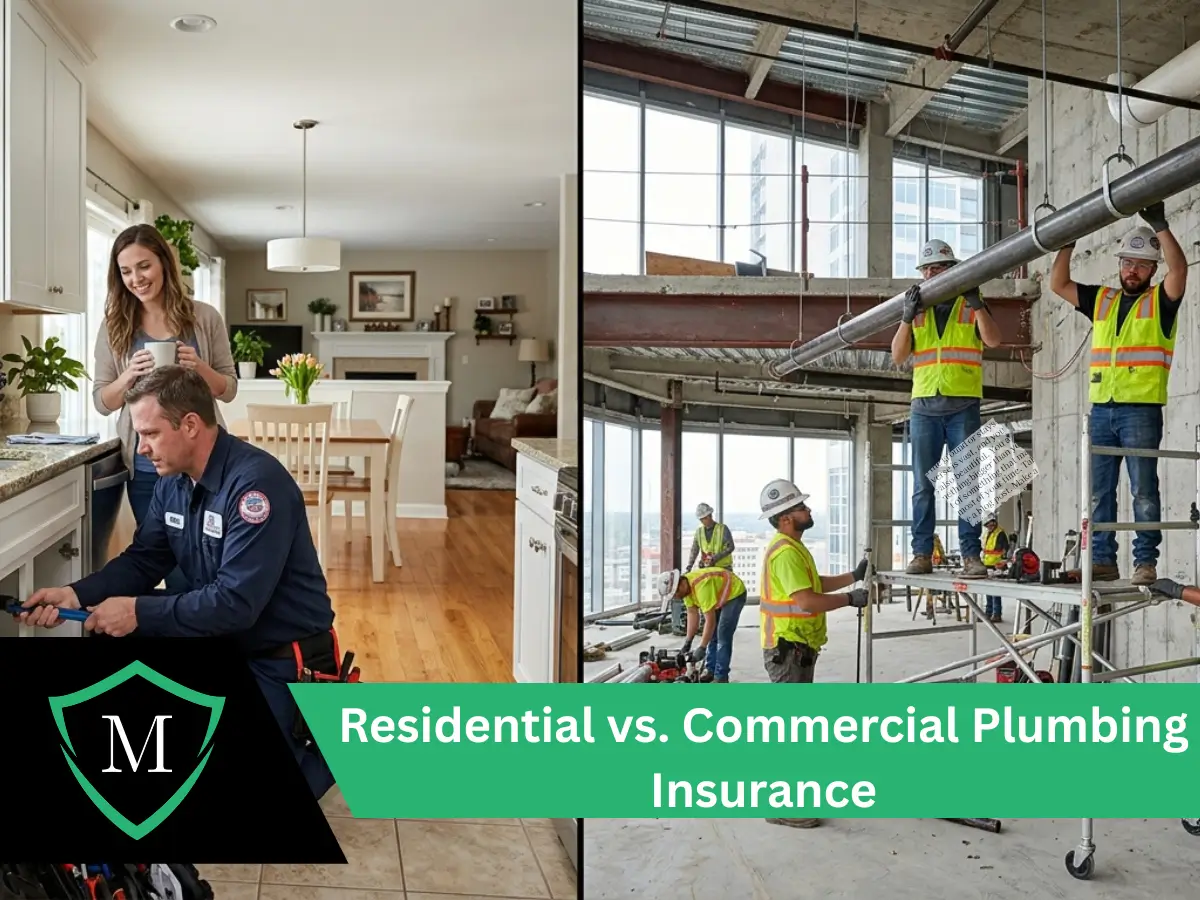
Residential and commercial plumbing businesses face different levels of risk.
| Residential Plumbing | Commercial Plumbing |
| Homes and small properties | Offices, buildings, and large facilities |
| Smaller service calls | Larger projects and contracts |
| Lower equipment requirements | Higher equipment and liability exposure |
| Individual customers | Property owners and contractors |
Commercial plumbing projects often involve higher contract values, larger job sites, and stricter insurance requirements.
Common Plumbing Insurance Mistakes
Many plumbing businesses experience problems because they do not review their coverage regularly.
Common mistakes include:
- Choosing coverage based only on price
- Using personal auto insurance for business vehicles
- Not protecting expensive equipment
- Carrying liability limits that are too low
- Forgetting to update coverage as the business grows
Insurance needs can change as a company adds employees, vehicles, services, or larger projects.
How to Choose the Right Plumbing Insurance
The right coverage starts with understanding the risks specific to your business.
Contractors should consider:
- The type of plumbing work performed
- Customer and contract requirements
- Equipment value
- Number of employees
- Potential liability exposure
Working with an independent insurance agency can help contractors compare coverage options and identify potential gaps. McDonough Insurance Services helps businesses evaluate insurance solutions based on their industry, operations, and risk profile.
Final Thoughts
Plumbing insurance is an important part of protecting a contractor’s financial future. From liability claims and equipment losses to employee injuries and vehicle accidents, the right coverage helps businesses handle unexpected events.
Every plumbing company has different risks, so insurance should be based on the way the business operates rather than a standard package. McDonough Insurance Services works with contractors to understand their needs and find coverage options designed around their specific business risks.
FAQs
Do plumbers need insurance?
Most plumbers benefit from insurance because their work involves property damage risks, customer injuries, vehicles, and expensive equipment. Requirements depend on state laws, contracts, and business operations.
Is plumbing insurance required in California?
Requirements vary based on business structure, licensing, employees, and project requirements. California businesses with employees generally need workers’ compensation coverage.
What is the average cost of plumbing business insurance?
Costs vary based on factors such as business size, location, coverage limits, claims history, employees, and services provided.
Does general liability insurance cover plumbing mistakes?
General liability insurance may cover resulting property damage from covered incidents, but it usually does not cover the cost of correcting faulty workmanship itself.
Does plumbing insurance cover tools?
Coverage depends on the policy. Many contractors use equipment or inland marine coverage to protect portable tools and equipment.
Do residential plumbers need business insurance?
Yes. Residential plumbers can face claims involving property damage, injuries, and equipment losses even when working on smaller projects.
What insurance do plumbing companies need for employees?
Companies with employees typically need workers’ compensation coverage and may also need liability, commercial auto, and other business insurance policies depending on their operations.