
Pest control business insurance usually starts with four policies: general liability, workers’ compensation, commercial auto, and commercial property. Depending on the work you do, you may also need pollution liability, professional liability, equipment coverage, or an umbrella policy.
Pest control carries more risk than most service businesses. Your technicians work inside other people’s homes and buildings, apply chemicals, drive all day, and make recommendations customers rely on. This guide explains what each policy covers, what California requires, what drives the cost, and how to keep claims down.
What Insurance Does a Pest Control Company Need?
Most pest control companies build their coverage from these policies:
| Coverage | What it covers | Who needs it |
|---|---|---|
| General liability | Injuries to others and damage to their property caused by your work | Every pest control company |
| Pollution liability | Spills, drift, and contamination claims that general liability often excludes | Most companies, especially fumigation and commercial work |
| Workers’ compensation | Medical care and lost wages for injured employees | Required in California once you have one employee |
| Commercial auto | Accidents in vehicles used for the business | Any company with service vehicles |
| Commercial property | Your office, storage, and inventory | Companies that own or lease space |
| Inland marine (equipment) | Sprayers and tools that travel between job sites | Most companies |
| Professional liability | Claims that an inspection, report, or recommendation was wrong | Companies doing inspections or termite reports |
| Umbrella or excess | Extra limits above your other liability policies | Larger fleets and commercial contracts |
General Liability
General liability insurance responds when someone outside your company says your work hurt them or damaged their property. A customer trips over a hose your technician left in the hallway, or a technician knocks over a TV while moving through the house. General liability can pay for the claim and your legal defense, subject to the policy terms.
Damage doesn’t always show up while the technician is still there. Products and completed operations coverage, usually part of the same policy, handles claims that surface days or weeks after the job is done.
What general liability often won’t cover is the chemical side of the business. Many policies exclude pollution, which is why the next coverage matters so much in this industry.
Pollution Liability
A pesticide spill in a customer’s garage, drift onto a neighbor’s garden, or a contamination complaint after a commercial treatment can all fall outside a standard general liability policy. Pollution liability is built for these claims, including cleanup costs.
How much you need depends on what you apply and where. Fumigation and large commercial accounts carry more exposure than routine residential service. Before you buy, read the pollution exclusion in your general liability policy, then confirm in writing what your pollution policy picks up, including spills while chemicals are being transported.
Workers’ Compensation
Technicians fall off ladders, strain their backs in crawl spaces, get bitten by animals, and are exposed to chemicals. In California, employers with even one employee must carry workers’ compensation, which pays for medical care and part of lost wages. Calling technicians 1099 contractors doesn’t settle the question; the actual working relationship does. Our guide to 1099 vs. W-2 misclassification explains the risk.
Commercial Auto
Your vans are on the road all day carrying equipment and product, so commercial auto coverage is essential. If technicians ever drive their own cars for work, add hired and non-owned auto coverage. Their personal policy protects them, not your company.
Property and Equipment

Commercial property insurance protects the office, storage area, and inventory against fire, theft, and vandalism. Smaller companies can sometimes bundle it with general liability in a business owner’s policy, though eligibility depends on the carrier and your services. Standard property policies generally exclude earthquake and flood, which need separate coverage. Business income coverage can replace lost revenue while you recover from a covered loss.
Equipment that moves between job sites needs inland marine coverage, since property policies are built around a fixed location. That’s different from equipment breakdown coverage, which pays when a machine fails internally, such as a motor failure in a sprayer rig.
Professional Liability
Professional liability, also called errors and omissions, covers claims that your advice or inspection was wrong: a missed infestation or a treatment plan that didn’t work. In California this matters most for wood-destroying organism (termite) inspection reports, which buyers and lenders rely on in home sales.
Umbrella and Excess Liability
One serious accident can exceed your policy limits, especially with several vans on the road or large commercial contracts. An umbrella policy adds limits on top of your liability policies. You may also see excess liability quoted; it generally follows the terms of the policy beneath it, while an umbrella can sometimes be broader.
What Insurance Does California Require for Pest Control Companies?

It depends on which agency licenses your business.
Structural Pest Control Companies
Companies that handle termites, fumigation, and household pests register with the Structural Pest Control Board. The Board requires registered companies to carry:
- At least $500,000 in general liability insurance
- A $12,500 surety bond
- A workers’ compensation certificate or a filed exemption
Your insurer completes the Board’s own certificate form, and the business name on it must match your registration exactly.
Agricultural and Landscape Businesses
These businesses are licensed by the California Department of Pesticide Regulation instead, and can show financial responsibility through chemical liability insurance or another approved option.
Whichever agency licenses you, anyone applying restricted-use pesticides must be certified or work under someone who is, under EPA rules.
What Affects the Cost of Pest Control Insurance?
There’s no single price. A one-truck residential company pays far less than a fumigation outfit with a fleet and commercial contracts. Carriers price your policy mainly on:
- Services: fumigation, termite work, and commercial applications cost more to insure than routine residential service.
- Payroll: workers’ comp is priced on payroll and the type of work employees do.
- Vehicles and drivers: the number of vans, mileage, and driving records.
- Claims history: a clean record is the biggest lever you control.
- Limits and deductibles: higher limits cost more, but limits set too low can leave you paying a large claim yourself.
To get an accurate quote quickly, have a list of your services, payroll, vehicles and drivers, the chemicals you use, any customer contracts with insurance requirements, and your claims history from the past few years.
How to Keep Claims Down
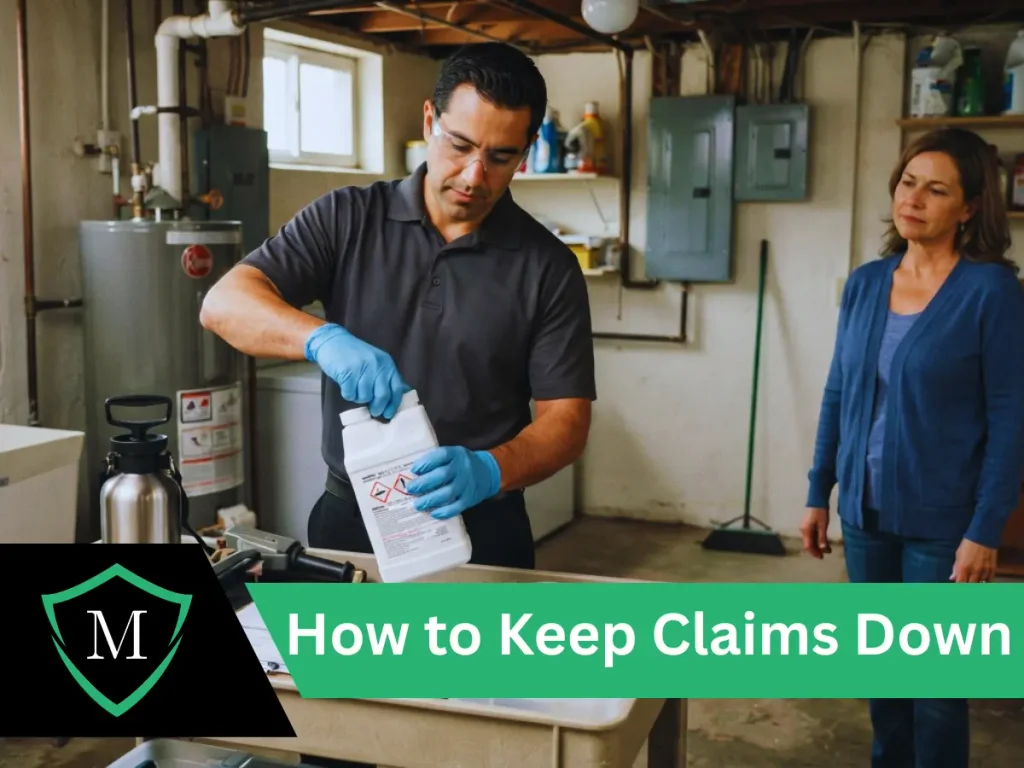
Most claims trace back to a few habits. Follow every product label exactly. Train technicians on each product and each type of job, not just on their first day. Document every treatment with the date, location, product, and photos, so you have a record if a customer disputes the work. And be careful with guarantees: promising to eliminate pests for good can turn an ordinary callback into a liability claim.
Ready to Review Your Pest Control Coverage?
McDonough Insurance Services is an independent, family-owned agency that has served California businesses since 1981. Because we’re independent, we compare coverage from multiple carriers instead of selling one company’s policy. Whether you run a one-truck residential route, a termite and fumigation company, or a commercial service fleet, we’ll:
- Match your coverage to the services you actually perform, including pollution and professional liability
- Check your general liability, bond, and workers’ comp against Structural Pest Control Board requirements
- Line up your limits and certificates of insurance with your commercial contracts
Have the details listed above ready, then request a pest control insurance quote or call 949-361-8471. Review your coverage every year, and any time you add employees, vehicles, services, or commercial customers.
FAQ:
Do I need workers’ comp if I work alone?
Not if you have no employees, but a California structural pest control company must still file an exemption with the Structural Pest Control Board. Once you hire, coverage is required.
Does general liability cover damage to the property I’m treating?
Often not. Standard policies exclude property in your care and the part you’re working on, so many pest control policies add it back by endorsement. Ask whether yours does.
Do I need special coverage for fumigation?
Usually, yes. Many pest control policies restrict or exclude fumigation, especially residential tenting, so tell your agent about any fumigation work and confirm it’s specifically covered.
Will insurance pay to re-treat a property?
No. Callbacks and re-treatments are a business cost, not an insured loss. Insurance responds when a customer claims your work caused injury or damage.
Are subcontractors covered by my policy?
Usually not. Require subcontractors to carry their own coverage and send a current certificate of insurance before they start. Our guide to subcontractor insurance explains what to check.
This article is provided for general informational purposes only and does not constitute legal, regulatory, or insurance advice. Coverage availability, policy terms, exclusions, limits, and regulatory requirements vary by business and location. Pest control business owners should consult insurance professionals and verify current requirements with the appropriate regulatory authorities.