

How home care every day brings deeply meaningful work and unpredictable risk.
A caregiver may gently help a client walk across a room. A simple slip, a misplaced step, or a misunderstood instruction can turn a moment of care into a costly claim. That’s exactly why caregiver liability insurance is more than a policy; it’s peace of mind for providers, staff, families, and the business that binds them together.
Imagine a world where every family feels confident welcoming a caregiver into their home because they know protection is in place. Not optimism. Protection. It’s not wishful thinking, it’s smart risk management.
What Caregiver Liability Insurance Really Is

Caregiver liability insurance isn’t about paperwork. It’s about protection from human errors and the consequences that follow. When a caregiver provides in‑home care, assisting with bathing, medication reminders, mobility, or daily tasks, the chance of an accident, misunderstanding, or unintentional harm is always present.
In legal terms, this insurance is designed to cover liability for claims alleging negligence, errors, omissions, or accidents arising during caregiving services. Without it, providers could be left to face expensive legal fees and settlements without a safety net.
This type of coverage isn’t optional, it’s essential. Beyond legal compliance, it sends a clear signal: your business takes safety seriously. For guidance on home care regulations, check U.S. Department of Health & Human Services Home Care Services.
What Caregiver Liability Insurance Covers
Understanding what caregiver liability insurance covers helps you see where risk lives and how to guard against it.
A typical caregiver liability policy can include coverage for:
- Professional Negligence – When a caregiver’s action (or inaction) accidentally harms a client.
- Bodily Injury Claims – Physical injuries sustained by the client during care.
- Property Damage – Accidental damage to a client’s home or belongings during a care visit.
- Legal Defense Costs – Attorney fees, court costs, and settlement expenses.
- Reputation Protection – Coverage to help manage costs related to public claims and reputation harm.
For instance, consider a situation where a caregiver misreads a medication schedule, and an elderly client experiences complications. A claim could allege negligence, and the associated legal fees alone can run into the tens of thousands. With this coverage, that financial burden is shared with the insurer, protecting your business’s future.
For example, CDC Guidelines on Home Safety recommend evaluating hazards in homes to prevent falls, a common source of claims for caregivers.
Types of Caregiver Liability Policies

One size never fits all, especially in insurance. There are several types of caregiver liability policies, each suited to different caregiving models:
Individual Caregiver Coverage
For solo practitioners working independently, this policy protects you against claims arising from your professional services.
Agency‑Level Coverage
If you manage a home care agency with a team of caregivers, this provides broader protection that includes employees and business operations.
Professional Liability (Errors and Omissions)
This type focuses on mistakes in service delivery, such as miscommunication, assessment errors, or overlooked care instructions.
Non‑Medical Liability Policies
Many caregiving roles do not involve medical procedures but still carry risk (e.g., mobility assistance, meal preparation, daily living tasks). Specialized policies fill that gap.
Choosing the right policy depends on your service structure, client needs, and operational risks. Combining these options with strong risk management practices strengthens your business from multiple angles.
How Insurance Protects In‑Home Care Operations
When caregivers walk into a client’s home, they take on responsibility far greater than physical tasks; they take on trust. Here’s how insurance protects in‑home care becomes real, day to day:
Financial Protection
Claims can drain resources fast, from medical settlements to defense costs. Insurance absorbs that financial shock, so your business doesn’t.
Employee Confidence
Caregivers who know they’re protected will work with confidence, not fear. That matters. Higher confidence translates into better performance and stronger retention.
Client and Family Trust
Clients and their families want assurance. Many require proof of insurance before onboarding home care services; it’s often a checkbox on intake forms.
Business Continuity
An unprotected claim could lead to closure or bankruptcy. With insurance, you keep doors open and phones ringing.
If you want to review official standards on caregiver operations and safety, the U.S. Department of Health and Human Services offers guidance on home care best practices.
Risk Management for Caregivers
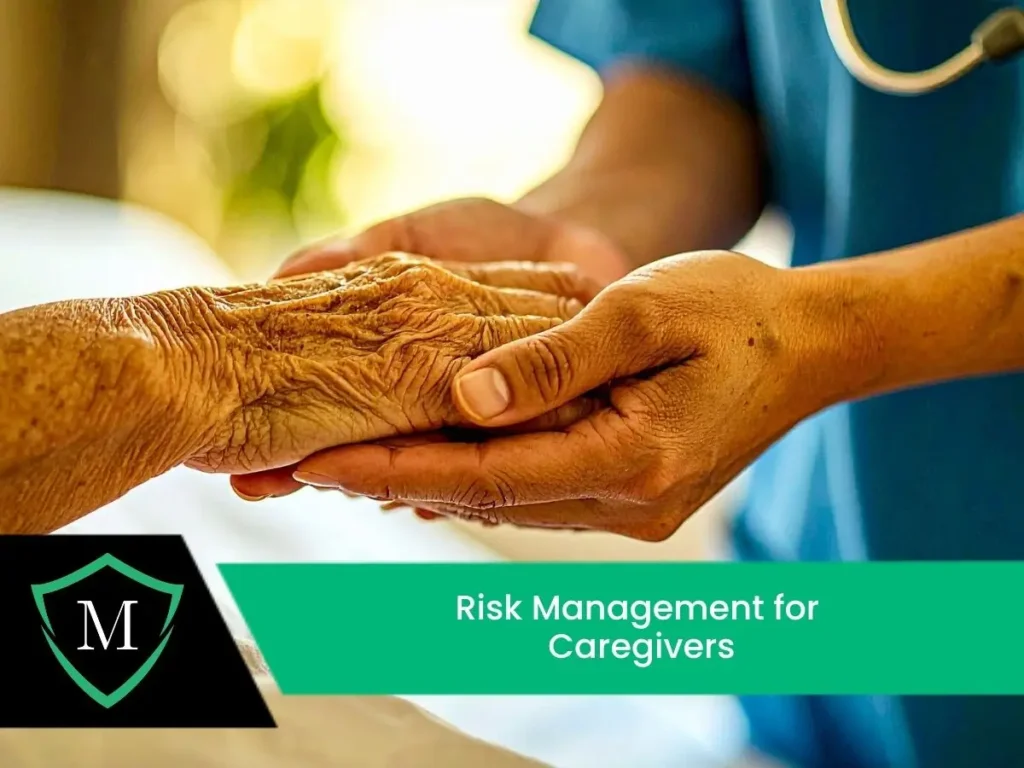
Insurance is your safety net. Risk management is your preparation.
Investing in risk management for caregivers drastically reduces the chance that you’ll ever file a costly claim.
These practical steps make a difference:
- Ongoing Training – Regular refreshers in safety protocols, client handling, and emergency response.
- Detailed Care Plans – Write clear, accurate records that everyone, caregivers, and families can reference.
- Safety Audits – Routine checks to identify hazards in clients’ homes (e.g., loose rugs, poor lighting).
- Communication Protocols – Confirm instructions, changes, or concerns with families in writing.
- Incident Reporting Systems – Track near misses and small issues before they escalate.
A well‑executed risk management strategy is not only good practice, but it also lowers your premiums and builds credibility with clients.
Real Stories, Real Protection
Stories stick. They make risks relatable.
Consider a caregiver named Carmen who was helping a client with mobility assistance. While transferring the client from bed to wheelchair, the client slipped and fell, injuring their hip. The family filed a claim alleging negligence. Without proper insurance, Carmen’s small agency could have faced legal fees easily reaching five figures, plus reputational damage.
Because the agency had caregiver insurance, the insurer handled defense costs and settlement negotiations. The business stayed open. Carmen kept her job. The client recovered with dignity.
These are the moments when coverage matters most.
Why Choose McDonough Insurance Services
When protection truly counts, experience matters, not just the policy.
McDonough Insurance Services has over four decades of experience helping businesses navigate complex insurance decisions and manage risk with confidence. They understand that caregiving is personal, and protection should reflect that.
Why clients trust McDonough:
- Decades of Expertise – Deep industry experience with tailored caregiver and business policies.
- Client‑First Philosophy – Recommendations designed to protect your interests, not commissions.
- Strategic Risk Guidance – Advice that combines insurance with risk prevention.
- Ongoing Support – Help with claims, questions, and planning, not just the initial sale.
- Cost‑Conscious Solutions – Aiming for maximum protection with manageable costs.
With McDonough insurance becomes not a burden, but a strategic advantage.
Conclusion
Caregiving is a calling, but it’s also a business that carries real risks. Caregiver liability insurance doesn’t just protect numbers on a balance sheet. It guards the hands that help clients, the families that trust you, and the future of your business.
When safety, trust, and protection are on the line, you need more than hope; you need a strategy.
Schedule your free consultation with McDonough Insurance Services today and fortify your home care business with protection that works as hard as you do.
Book Your Free Consultation with McDonough Insurance Services Today, because protection should never be an afterthought.
FAQs
What is liability coverage for caregivers?
Liability coverage for caregivers protects caregivers and home care businesses from claims related to accidents, errors, or negligence that may happen while providing care.
What incidents does liability coverage for caregivers cover?
This type of insurance typically covers professional negligence, bodily injury, property damage, and legal defense costs arising from caregiving-related claims.
Are there different types of caregiver liability policies?
Yes. Options include individual caregiver coverage, agency policies, professional liability, and non‑medical liability, depending on your services.
How does insurance help in‑home care businesses?
Insurance protects financial stability, employee confidence, client trust, and ensures business continuity after unexpected claims.
What risk management strategies help reduce claims?
Regular training, safety audits, clear documentation, and communication protocols help prevent incidents and lower insurance claims.